What happens when spent batteries go into a microwave? Researchers found a way to turn old cathodes into upgraded materials for future energy storage.
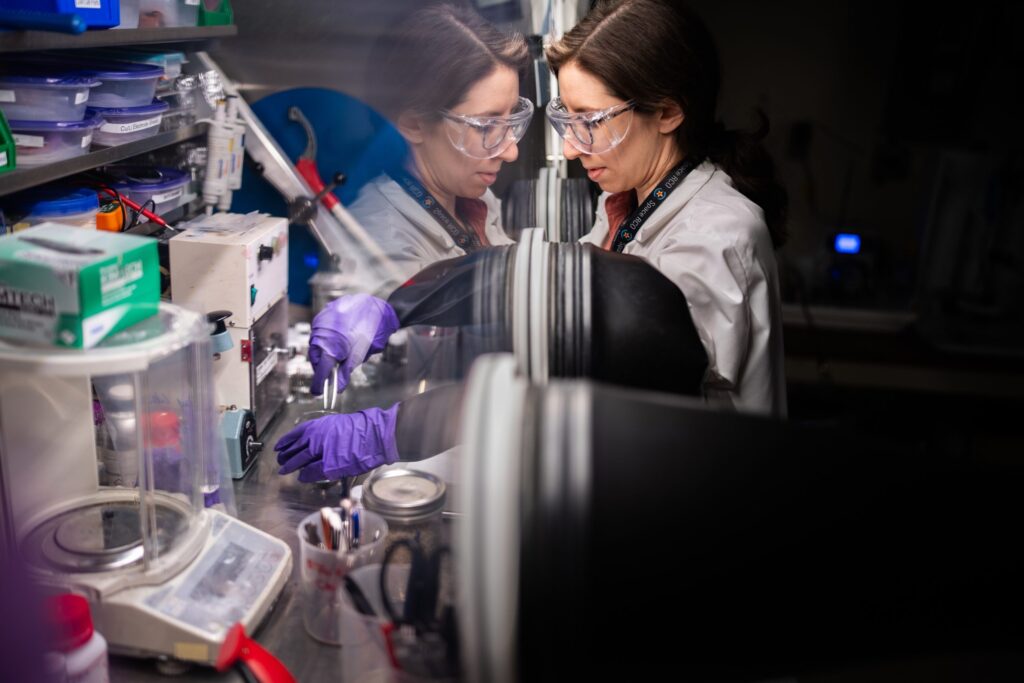
A team at Sandia National Laboratories has developed a microwave based process that upcycles lithium ion battery cathodes, turning discarded battery materials into higher value components for new energy storage systems.
Cathodes are among the most expensive parts of lithium ion batteries because they rely on critical minerals such as lithium and cobalt. Conventional recycling methods often require high temperature processing and significant energy consumption. The new approach instead uses a microwave reactor and a large positively charged ion to break used cathode material into ultrathin nanosheets in just two hours, compared to about seven days with earlier techniques.
The key advantage lies in the nanosheet structure. Once the cathode material is separated into these thin layers, researchers can more easily replace expensive metals such as cobalt with alternatives like nickel, allowing older battery chemistries to be upgraded to meet current industry requirements. The process can also repair microscopic defects that develop during years of battery operation while removing impurities from the material.
The microwave method achieved a 95% conversion rate to nanosheets, significantly higher than the 60% obtained using previous approaches. Researchers say the low temperature process could reduce energy consumption compared to conventional furnace based recycling while increasing the economic value of recovered materials.
An additional benefit is that the extracted cobalt can be recovered and reused to create more cathode material, potentially generating two new cathodes from the resources contained in one spent battery.
“This method could also be extended to other types of battery cathodes such as sodium-ion batteries or zinc-ion batteries,” says Aliya Lapp, electrochemist.“As long as the cathode material is a layered intercalation compound, our method will work. This is a fantastic technology with a lot of potential.”