




Startup surges can damage power systems. These inrush current limiters help control spikes, protect equipment, and save energy in a simple, compact way.
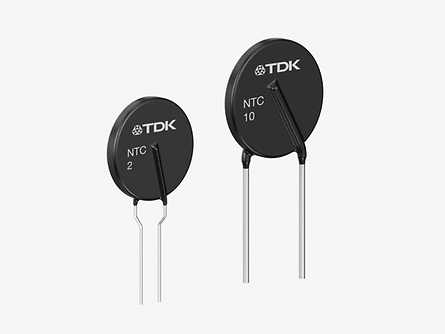
Power electronics used in systems like industrial drives, solar inverters, UPS units, and high-wattage power supplies face a common problem: large inrush currents when the system powers on. These sudden current spikes can damage components, stress relays, blow fuses, shorten system life, and reduce overall reliability. Engineers often work around this with bulky fixed resistors or relay-based soft-start circuits, but those add complexity, cost, and wasted power.
The S series inrush current limiters from TDK are built for engineers who need a simpler and more efficient way to manage startup surges in high-power systems. The series includes two NTC thermistor families S30 and S36 designed specifically for applications with high stored energy and demanding startup profiles. Both can handle steady-state currents from 10 A up to 35 A, with energy absorption capability reaching 750 J, making them suitable for large power supplies, frequency converters, photovoltaic inverters, UPS systems and motor soft-start circuits.
Some of the key features of the S series include:
- S30 version: compact 30 mm size, power rating up to 19 W
- S36 version: larger 36 mm disk, power rating up to 25 W
- Resistance range: 2 Ω to 20 Ω (varies by model)
- Supported capacitance: up to 13,050 μF at 240 V AC
- Built for harsh environments
- Conforms to IEC 55/170/21 category
A key benefit of these devices is lower power loss during steady operation compared to traditional resistor relay circuits. This improves system efficiency and can reduce long-term operating costs, especially in equipment that runs continuously.
To support long service life in challenging conditions, the thermistors use tinned copper leads and a flame-retardant coating rated UL 94 V-0. The structure is optimized for stability, electrical endurance and predictable performance over repeated on-off cycles.
The S series is for engineers building high-power systems who need a reliable, compact and energy-efficient way to control inrush current without adding extra switching hardware or complexity.


