Scientists shrink OLED pixels to the nanoscale, setting up a new phase for wearable displays.
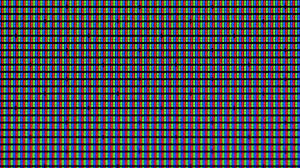
Shrinking display LEDs has always been difficult because small LEDs often fail when current concentrates at their corners, causing short circuits. Physicists have now solved this problem by creating the world’s smallest working light pixel.
Their research shows how future displays for smart glasses and other wearables can become much smaller while remaining bright and stable.
The team built this new pixel using an organic light-emitting diode (OLED) combined with an optical antenna. In normal OLEDs, when engineers try to make pixels smaller, the current flow becomes uneven, damaging the device.
The research team from Julius-Maximilians-Universität Würzburg in Germany fixed this by designing a new structure that controls how the current spreads inside the diode while also strengthening the light output.

Each pixel they made measures 300 by 300 nm, which is smaller than the width of a human hair, yet emits orange light as bright as a regular OLED pixel that is much larger at 5-by-5 micrometres.
This means a full high-definition display could fit into an area smaller than one square millimetre. Such small displays could one day be built into the sides of smart glasses or other wearable devices without adding bulk.
To stop the smallest pixels from burning out, the researchers added an insulation layer over the gold antenna, leaving only a tiny circular opening for the current. This keeps the structure stable and prevents short circuits. The next goal is to improve efficiency, which is now around one percent, and expand the colours to cover red, green, and blue light for full-colour nano displays.