




What if robots could move like real muscles? The fiber actuators remove hardware, delivering motion for robotics and wearable systems.
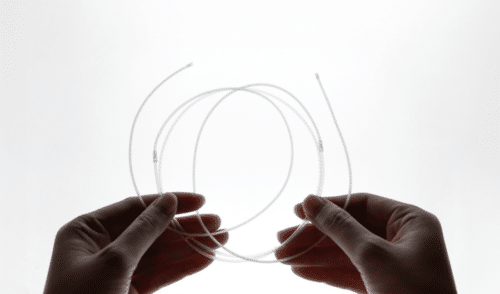
Researchers at MIT have developed artificial muscle fibers that combine strength, speed, and control in a compact system, addressing key limits that have slowed progress in robotics and prosthetics.
The fibers are designed to work like biological muscle units. Multiple fibers can be arranged into larger structures depending on the task. Unlike conventional actuators, they are flexible, quiet, and can operate without external motors or bulky hardware, making them suitable for systems that interact closely with the human body.
The system is built by combining a thin fluid-driven McKibben actuator with a miniaturized electrohydrodynamic (EHD) pump. The pump generates pressure inside a sealed fluid chamber without moving parts or an external fluid supply. This removes the need for large hydraulic setups that earlier soft actuators depended on.
In previous designs, external pumps made systems heavy and difficult to scale. Here, millimeter-scale EHD pumps are integrated directly into the actuator system. These pumps move fluid by injecting charge into a dielectric liquid, creating ions that drive flow. The result is a compact and scalable approach that maintains pressure within a closed fluid circuit.
The actuators are arranged in antagonistic pairs, where one contracts while the other extends. A small pump placed between them shifts fluid from one side to the other, enabling controlled motion. This setup also stores fluid internally, eliminating the need for an external reservoir.
The system operates with a required internal bias pressure. Maintaining this pressure prevents cavitation, where vapor bubbles form and disrupt fluid flow. Adjusting the bias pressure allows control over performance, including response speed and contraction range.
Compared to servo motor systems, which produce rotational motion and require mechanical conversion, these fiber muscles generate linear motion directly. This allows them to be distributed across structures instead of being concentrated at joints, enabling more compact designs.
These electrofluidic muscles can be used in wearable systems such as exoskeletons and assistive devices. The same design approach can also apply to other fluid-driven robots where internal pumping can replace external systems.
The work shows a complete system design, from pump integration to actuator behavior and testing. By removing bulky components and enabling silent operation, it improves portability and power density in soft robotic systems.


