




A new ultra-compact, stackable power module design drastically raises current delivery limits while shrinking footprint for next-gen data center and AI computing systems.
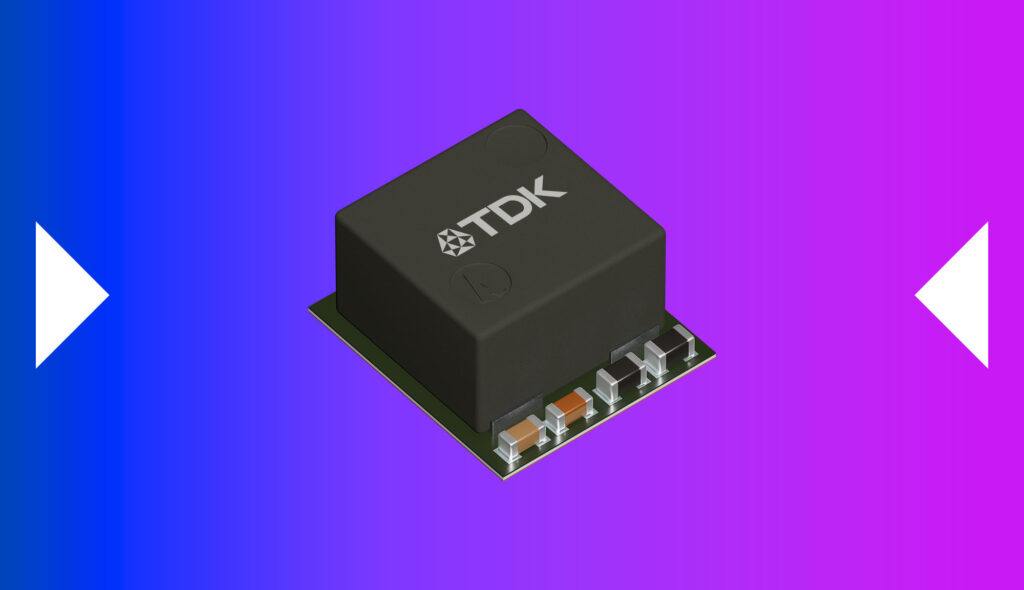
Electronics designers have a powerful new tool for distributing high currents in tight spaces: a stack-optimized point-of-load (PoL) power module by TDK Corporation that scales up to 200 A by combining multiple tiny units in a vertical configuration. The advancement leverages advanced packaging and integration to support demanding applications where space, efficiency, and transient response matter most.
The module, just 3.82 mm tall, tackles a perennial challenge in modern boards: delivering stable low-voltage power to AI accelerators, edge servers, and telecom equipment without sprawling layouts or complex external circuitry. By stacking up to eight identical units, engineers can reach up to 200 A of combined output while keeping height and board real estate at a minimum, a critical factor for data center racks and compact embedded systems.
The key features are:
- Ultra-compact PoL module with 3.82 mm height
- Scales up to 200 A via stackable design
- Ultra-fast transient response, low ripple & spectral noise
- Integrated MOSFETs, inductors & digital control
- Digital telemetry & programmability (I²C/PMBus)
Performance metrics show a design tailored for ultra-fast transient response and minimal DC ripple, essential for processors that shift workloads quickly. Low spectral noise also supports sensitive subsystems such as digital signal processors and high-speed communication links. These attributes help maintain stable voltages even under rapid load changes typical of AI inference and network traffic spikes.
Internally, the module integrates key power chain elements including MOSFETs, inductors, and control circuitry into a thermally enhanced 3D structure with both analog and digital interfaces. Designers can tap digital programmability (via interfaces like I²C/PMBus) for telemetry, adaptive tuning, and fault management, giving real-time insights into voltage, current, and temperature conditions right at the load.
This scalable approach also fits well with modern vertical power delivery trends, where converters sit beneath high-performance ASICs, FPGAs, or SoCs to trim power-path length and enhance efficiency. Support for widely used designs such as PCIe, VPX, and 1U–3U rack systems broadens the module’s applicability across both commercial servers and specialized embedded platforms.


