




A tiny wearable device can tell when you are tired by tracking your blinks. Can it help keep people safe and healthy every day?
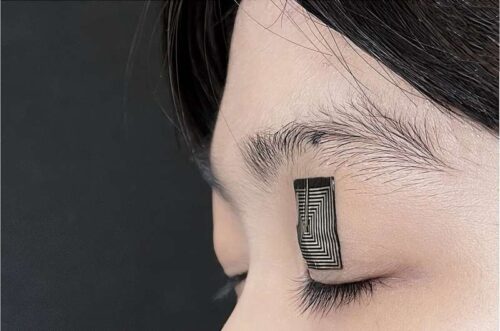
Researchers at UCLA have developed a wearable sensor that can reliably measure fatigue in real time outside laboratory settings. The device tracks blinking patterns, detecting changes in eyelid movements to monitor mental performance drops caused by stress, lack of sleep, or overactivity. This approach provides a practical alternative to existing fatigue measurements, which rely on subjective questionnaires, EEG, or camera systems and often work only in controlled lab environments.
The soft sensor attaches gently to the eyelid like a second skin. It is stretchable, battery-free, and converts every blink into electrical signals for real-time monitoring. A conductive gold coil on a thin thermoplastic elastomer sits atop a magnetoelastic film filled with tiny magnets. Each blink produces mechanical stress that alters the material’s magnetic properties, which the device translates into data. The fully wearable system includes onboard wireless transmission, enabling use in everyday settings such as roads, classrooms, or workplaces.
Magnetic sensing was chosen for its resilience to humidity and water exposure, addressing a key limitation of conventional bioelectronic devices. The team demonstrated a giant magnetoelastic effect in soft polymer composites for the first time, allowing small biomechanical pressures—like blinking or heartbeat—to generate measurable magnetic changes. This effect reduces the pressure threshold required for sensing from 10 MPa to around 10 kPa, enabling soft, reliable bioelectronics.
The underlying technology also supports a soft magnetoelastic generator (MEG), creating a platform for body-powered, intrinsically waterproof devices. Beyond fatigue monitoring, this system can track heart rate, breathing, respiration, muscle activity, environmental conditions, and could even harvest energy from wind or water waves.
The discovery of giant magnetoelastic effects in soft systems opens possibilities for energy harvesting, sensing, therapeutic applications, and human-machine interfaces. Researchers are continuing to refine the fatigue sensor for commercial use while exploring broader applications of this technology, aiming to develop practical, responsive bioelectronic devices that integrate seamlessly into daily life.


