




A global memory shortage driven by AI data-centre demand is pushing up DRAM and flash-storage costs for phones, laptops and hobbyist boards worldwide.
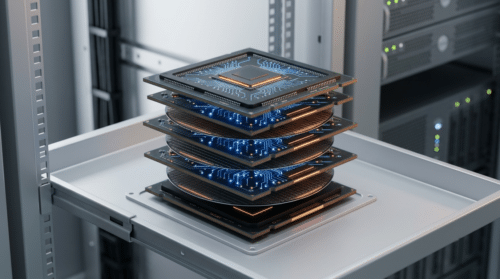
Laptops, smartphones and hobbyist single-board computers are facing higher memory costs as AI data-centre demand tightens the supply of DRAM and other memory components. The shortage is already affecting hardware prices and could continue until memory supply catches up with demand.
Dynamic random-access memory (DRAM) is the short-term working memory used by most computing devices to hold data that processors need while running applications. It is called “dynamic” because its stored charge gradually leaks and must be refreshed continuously to retain data. Unlike DRAM, non-volatile flash storage such as eMMC and UFS keeps data without continuous power and is used for files, applications and the operating system. When a device struggles with several applications running at once, limited DRAM can become a bottleneck even when the processor has enough performance.
Hobbyist hardware maker Pine64 has announced that it has no plans to manufacture new Linux devices in the near future, citing the current DRAM and eMMC shortage and high component prices. The company expects devices such as the PineNote and PineTab2 to run out of stock within about three months. Pine64 is a small manufacturer, but its decision highlights a wider problem: AI data-centre expansion is putting additional pressure on memory supply as manufacturers shift capacity towards high-bandwidth memory (HBM) and other products used in AI systems. J.P. Morgan says conventional memory supply has already fallen by around 20 per cent as capacity has been moved towards higher-end memory, while AI server demand is adding further pressure.
J.P. Morgan Global Research estimates that DRAM prices will have risen by more than 400 per cent between the start of 2024 and the end of 2026. TrendForce expects conventional DRAM contract prices to rise another 13 to 18 per cent quarter-on-quarter in the third quarter of 2026, despite weaker consumer demand. In the US, the Consumer Price Index (CPI) for software and accessories and the Producer Price Index (PPI) for storage devices have both risen 23 per cent since the end of 2024, according to J.P. Morgan economist Abiel Reinhart. He estimates that every 10 per cent increase in hardware costs adds roughly 0.1 per cent to core inflation.
The shortage is affecting a wide range of electronics that use memory, including smartphones, laptops, televisions and Raspberry Pi- and ESP32-based boards used by hobbyists and students. TrendForce expects smartphone makers to raise retail prices in the third quarter of 2026 to offset persistently high low-power DRAM (LPDDR) costs, adding further pressure to handset sales. Hobbyist hardware is also exposed to the same supply constraints, as boards with onboard RAM or flash storage depend on memory components from the same wider supply chain.
Unlike the 2020–2022 memory shortage, which was largely linked to pandemic-era supply-chain and logistics disruptions, the current shortage is more structural. J.P. Morgan analyst Jay Kwon attributes the pressure to rapidly growing AI workloads, with the cost of running AI workloads per unit of computation falling by about 90 per cent annually, encouraging further demand for computing and memory. Significant new memory-fabrication capacity is not expected before late 2027 or 2028, while Pine64 has linked any restart of new Linux-device production to the pricing of DRAM and eMMC components after mid-2027.
India still relies heavily on imported DRAM and NAND flash, so global memory-price increases can feed into the cost of electronics sold in the country. Import duties and GST can add to the final price of imported electronics, but the exact treatment varies by product and tariff classification. India’s semiconductor ecosystem is expanding, however, with Micron’s Sanand facility now in commercial production, assembling and testing DRAM and NAND products using wafers from Micron’s global manufacturing network. This gives India domestic memory assembly and testing capacity, but does not yet remove its exposure to global prices for the underlying memory chips. The “chipflation” affecting the global memory market could therefore still feed into products ranging from Raspberry Pi boards to smartphones, even when those products or memory modules are assembled in India.
For more information, click here.


