What if your phone’s GPS knows more than just where you are? It might already be sensing what you are doing and what is around you silently.
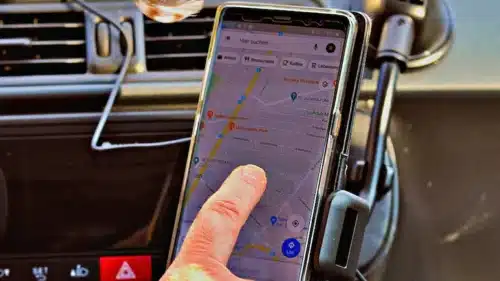
We usually think of GPS as something that helps us find routes, share our location, or track a delivery. But a study from IIT Delhi shows that the GPS data inside our Android phones can reveal much more about us, from what we are doing to where we might be indoors.
The researchers built a system called AndroCon and it changes how we think about GPS. It shows that the detailed GPS data our apps already use can act like a hidden sensor. That means even without using the camera, microphone, or motion sensors, an app could learn whether we are sitting, standing, lying down, or if we are in a metro or a quiet room.
Here is how it works. AndroCon looks at nine GPS signals such as Doppler shift, signal power, and multipath interference, and uses signal processing and machine learning to turn that data into meaning. With this, it can draw an indoor map showing rooms, staircases, or elevators with an error of less than four meters.
This can help build new kinds of apps that sense movement or guide us indoors without extra hardware. But there is a risk. If GPS can reveal this much, any Android app with location access could also find details about us without asking for more permissions.

That is the question AndroCon raises for all of us. How do we balance useful location-based apps with the need to protect our privacy from hidden data use inside GPS?
“This study reveals an unseen side of GPS. A powerful but silent channel that can sense the world around us. AndroCon turns the everyday smartphone into an unexpectedly precise scientific instrument and a reminder that even the most familiar technologies still hold hidden secrets that can be misused by malicious entities,” said Smruti R Sarangi, Professor, Computer Science and Engineering Department, IIT Delhi.