




This new memory-based chip improves processing analogue signals faster, by consuming less energy and way more efficiently.
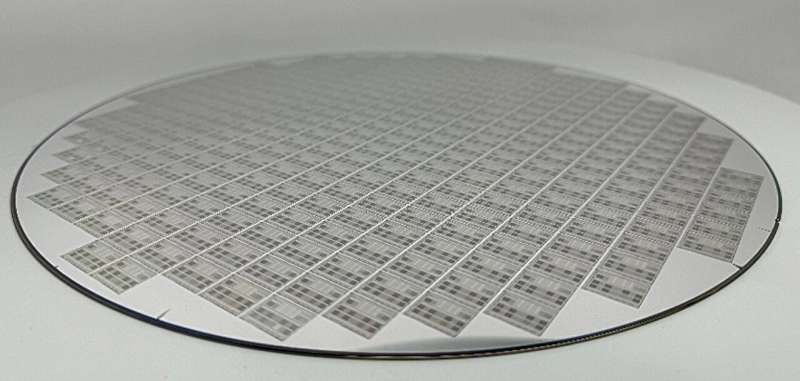
A team of researchers from the University of Massachusetts Amherst, Texas A&M University, and TetraMem Inc., has developed a new type of System-on-Chip (SoC), which is designed to process analogue Radio Frequency (RF) signals faster and more efficiently than conventional Software-Defined radios (SDRs).
Unlike traditional SDR, which rely on digital components and Analog-to-Digital converters (ADCs) that consume significant energy and introduce latency, this method uses memristors, which are non-volatile memory devices capable of processing and storing analogue signals in place.
The integrated chip mimics the brain’s method of real-time sensory processing, reducing energy consumption by eliminating constant data transfer between memory and compute modules.
At the core of the new SoC is a crossbar array of memristors that directly handles real-time RF inputs. This grid-like structure encodes the weights of a neural algorithm, allowing the chip to process signals and extract relevant information on-device, without converting it into digital form. This approach enables ultra-low-latency and energy-efficient and with high accuracy signal processing directly on edge devices,
The chip distributes both signal processing and AI inference across ten computing cores, supported by fully integrated on-chip peripheral circuitry. The result is a high-speed, low-energy platform well suited for edge applications and next-generation wireless networks.
The researchers view this SoC as an early step towards embedded AI for 6G and advanced Wi-Fi systems, where smart, adaptive RF processing will be critical. Future versions will target higher frequencies and expanded functionality, with the goal of commercial integration into real-world wireless ecosystems.
This breakthrough offers a glimpse into the future of AI-driven analogue signal processing, where intelligent edge devices process data faster and more sustainably than ever before.
