


The device helps sensors stay on wet, moving places like the stomach or fish without power. It can help with health and tracking.
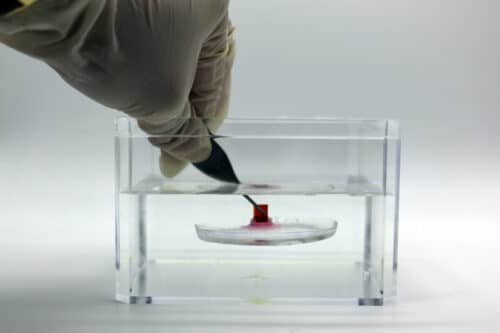
Researchers from MIT and partner institutions have developed a new mechanical adhesive system that enables long-term attachment of electronic sensors to wet, moving surfaces such as the gastrointestinal (GI) tract without using motors or external energy. The system could expand applications in health monitoring, internal sensing, and environmental data collection.
Called MUSAS (mechanical underwater soft adhesion system), the platform works by using the body’s own motion and built-in material design to hold sensors and drug delivery components in place. Electronics integrated into the system can detect conditions like acid reflux by monitoring acid flow in the esophagus. It can also measure temperature underwater, as demonstrated when it was attached to a live fish.
The key to stable adhesion lies in a disc-based structure lined with small spines made from shape-memory alloy. These spines activate with body heat and lightly anchor into soft tissue without causing damage. This grip mimics the suction strategy of the remora fish, which clings to marine animals in motion.
Tests showed the device sticking successfully to various surfaces including pig stomach tissue, nitrile gloves, and fish skin. Electronics mounted on the device stayed functional and attached during movement, highlighting its potential for internal medical electronics or aquatic sensor networks.
Researchers also embedded RNA molecules into microneedles on the disc structure for timed drug delivery. One test showed successful gene transfer to cheek and esophagus cells using RNA coding for a light-emitting protein. These features could support future applications in vaccine delivery or hormone modulation through internal stimulation.
The device’s design draws heavily from remora fish anatomy. The lamellae structures and spinule patterns were adapted to offer different gripping strengths based on remora species that cling to various marine hosts, from fast swimmers to bottom dwellers.
By combining bio-inspired mechanics with electronics, the project overcomes long-standing challenges in internal sensor placement and drug delivery—such as movement, moisture, and the renewing mucosal surface of the GI tract. The adhesive system’s ability to function without motors or batteries makes it well suited for sensitive environments where traditional electronics struggle to stay attached or powered.
Researchers believe this low-energy, grip-based design could help build next-generation ingestible or implantable electronics, and even aquatic sensor systems that stay attached to marine animals to collect data passively over time.