





Why spin off a dedicated subsidiary, and how does it plan to stand out in a competitive global market? Suman Narayan, CEO of Cyient Semiconductor, unveils the company’s strategic vision during an insightful conversation with EFY’s Nitisha…
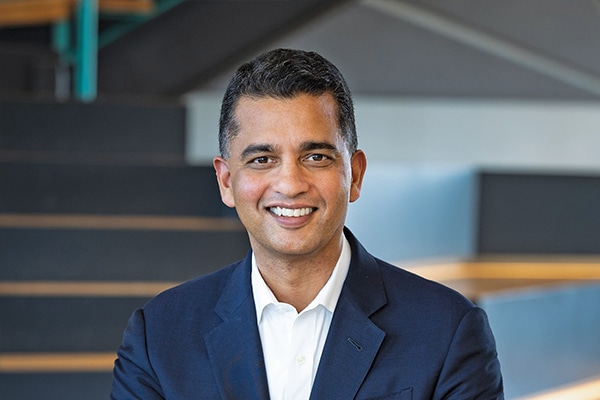
Q. Why was Cyient Semiconductor spun off as a dedicated subsidiary?
A. The semiconductor business operates with a markedly different P&L structure from traditional services and demands significant upfront investment. To manage this effectively, we established a separate P&L ownership and go-to-market strategy—hence, the decision to spin it off into a dedicated subsidiary.
Q. What is the main business focus of this new subsidiary of Cyient?
A. The main focus of the new subsidiary, Cyient Semiconductor, is on ASIC and ASSP—application-specific integrated circuits and application-specific standard products. We are concentrating on custom chips specifically developed for market needs.
Q. Will Cyient Semiconductor focus only on design, or will it also cover manufacturing?
A. We are currently focused on design and development, including architecture, verification, tape-out, packaging, and final test. We partner with global foundries like TSMC and GlobalFoundries for manufacturing. For assembly, we rely on partners, mainly in Taiwan. However, we own the final test phase to ensure quality. As India strengthens its OSAT and fab capabilities, we will look at incorporating them into our ecosystem in the future.
Q. What sectors will Cyient Semiconductor primarily target with its turnkey ASIC solutions?
A. Our focus is on sectors that require high integration, low power consumption, small form factor, and cost efficiency, mainly industrial applications such as industrial automation, medical, and data centres. These applications benefit greatly from combining intelligent computing, power electronics, and analogue functionalities in custom silicon, which we aim to deliver.
Q. What is the current location and team setup of Cyient Semiconductor? Are there plans for new facilities?
A. Our headquarters are in Hyderabad, where most of our team is currently based. We are expanding globally for sales, with teams in the US, Taiwan, and Japan. We also have a strong R&D partnership with IMEC in Europe. In terms of facilities, we plan to consolidate and expand our R&D operations within Hyderabad rather than setting up new centres elsewhere.
Q. How is Cyient Semiconductor using its global presence to cater to diverse markets, including India, the US, Europe, and Taiwan?
A. To define architecture and specifications effectively, it is necessary to be close to the customers. That is why the company is building global sales and engineering teams to ensure close collaboration across regions and efficient delivery of design and product requirements.
Q. Can you share insights about the current order book and demand pipeline for Cyient Semiconductor?
A. While I can’t disclose specific numbers, we have seen significant customer interest since our launch. We have closed new opportunities over the past 70–80 days and are experiencing growing traction from both customers and ecosystem partners.
Q. What process nodes does Cyient Semiconductor currently work with, and how are they chosen?
A. We primarily work with process nodes above 40nm. For analogue/mixed-signal and power applications, shrinking the die isn’t always beneficial. Older nodes are more cost-effective and better suited to our needs. We also evaluate the on-resistance (RDSon) characteristics, which are critical for power efficiency. Both GlobalFoundries and TSMC offer good processes in this space.
Q. What types of semiconductor packaging technologies do you support?
A. We support a wide range of packages, including complex ones. For instance, we recently worked on a 196-pin BGA package. We also support DFN, QFN, and TSWAP, depending on the complexity and customer requirements.
Q. Do you have capabilities in high-voltage design processes?
A. Yes, many of the processes we use support up to 100 volts, which is essential for applications involving 48-volt batteries. We are well-equipped to handle high-voltage requirements in-house.
Q. What is the customer profile of Cyient Semiconductor, and what kind of support do you provide across the product lifecycle?
A. Our customer base ranges from startups to Tier 1 OEMs. For example, we’re working with Azimuth AI in India on energy metering. We support customers across the full development cycle—from architecture definition to design, verification, tape-out, post-silicon validation, packaging, final testing, and delivering turnkey silicon.
Q. How will Cyient Semiconductor differentiate its ASIC turnkey offerings from competitors?
A. Our differentiation lies in our ability to offer full turnkey solutions from architecture to final tested silicon. Most competitors do not provide end-to-end services. Our customers can rely on us for the complete supply chain without worrying about managing complex semiconductor logistics. With Cyient’s 30+ years of heritage and long-standing partnerships, such as the one with IMEC since 1998, we bring both experience and stability to the table.
Q. How does this new subsidiary align with India’s national agenda for building a robust semiconductor ecosystem, as outlined by the Ministry of Electronics and IT (MeitY)?
A. Our subsidiary aligns very closely with the Government of India’s semiconductor vision, which emphasises building a resilient and innovation-driven ecosystem. The aim is not only to meet domestic demand but also to export high-value, high-impact technologies. By focusing on custom chip design, we leverage Indian talent and collaborate globally across the semiconductor value chain. This supports India’s ambition to become a strategic global player in the semiconductor industry.
Q. Could you provide us with an overview of Cyient Semiconductor’s vision and its place within the Indian semiconductor ecosystem?
A. Cyient Semiconductor is primarily focused on the development of custom ASICs. The global semiconductor market is growing rapidly, from a $600 billion total addressable market today to a projected $2 trillion by 2032. This growth is driven by demand in sectors like industrial automation, robotics, and data centres, which require custom silicon. Our vision is to be a high-value player in this space, particularly in improving power efficiency in applications like data centres, where even a 1–2% gain in efficiency can result in millions of dollars in savings. Our focus areas include intelligent computing, analogue/mixed-signal chips, and power solutions.
Q. How does the recent collaboration with MIPS fit into Cyient Semiconductor’s long-term vision?
A. The partnership with MIPS is crucial for our intelligent compute offerings. Their Atlas RISC-V processor enables real-time computing, which is essential for applications in data centres and motor control. It complements our strengths in analogue, power, and mixed-signal design, helping us create more integrated, differentiated ASIC solutions.
Q. What are the key challenges and opportunities Cyient Semiconductor anticipates in the global semiconductor market?
A. The biggest challenges are the complexity of the supply chain and long development cycles. Customers often underestimate how long it takes, typically 100 to 200 weeks, to bring a semiconductor product to market. The opportunity lies in India’s growing focus on becoming a semiconductor hub and our ability to deliver complete, high-quality solutions.
Q. What are the factors contributing to the fragility of the global semiconductor supply chain?
A. Geopolitical issues are forcing companies to localise supply chains. This leads to increased R&D costs, as companies may need to do multiple tape-outs for different regions. Different fabs may require different design processes, which can complicate production and increase expenses.
Q. What strategic measures can governments and companies take to strengthen the supply chain?
A. First, governments must continue elevating semiconductors as a national priority. Second, they need to recognise and support the long development timelines. Finally, encouraging domestic chip development by Indian companies for Indian products is essential to strengthening the local ecosystem.
Q. What is the current workforce size at Cyient Semiconductor, and what are the hiring plans?
A. We currently have around 400 to 500 employees. The focus isn’t on scaling numbers, but on increasing productivity through automation and hiring highly skilled engineers. We aim to deliver more products with fewer people while maintaining high quality.
Q. What engineering roles are most in demand at Cyient Semiconductor?
A. Analogue engineers are in particularly high demand. If you’re good at analogue design, you can command great opportunities in the semiconductor sector in India.
Q. Are you hiring fresh graduates or mainly experienced professionals?
A. We believe in a mix of both. Fresh graduates form the base of the talent pyramid, while experienced professionals guide and mentor them. Our goal is to develop future leaders internally. We are partnering with local universities in India to build our talent pipeline in Hyderabad.
Q. What is your talent acquisition strategy to attract specialists in a competitive market?
A. We focus on offering a clear career path, challenging and meaningful work, and competitive compensation. More than experience, we value accelerated learning. We follow the ‘10,000-hour rule’—engineers who focus intensely on a skill for five years can quickly become experts.
Q. Are there any partnerships with universities or institutions to build a talent pipeline?
A. Yes, we are building partnerships with institutions like IIITs, IITs, and BITS Pilani. We are hiring a dedicated leader to drive these academic collaborations starting in mid-July.
Q. Are you offering internships or training programs for engineering students?
A. Yes, we plan to roll out internship programs by the end of the year. We will target BTech students in their second to fourth years, and MTech and PhD students focused on electrical engineering.
Q. What is the hiring mix between local and international talent?
A. Around 80% of our hires will come from the domestic talent pool in India. We are committed to nurturing and growing local talent.
Q. Are there any additional future expansion or branding strategies you would like to share?
A. Our goal is to be recognised as India’s leading semiconductor provider for ASICs in industrial automation and data centres. We’ll continue to invest in R&D and refine our go-to-market and branding strategies to ensure that people recognise Cyient Semiconductor as a reliable, high-quality provider.

