Cutting pollution at intersections may be easier than many think. Small changes in driving could make a difference. Here is what the study found.
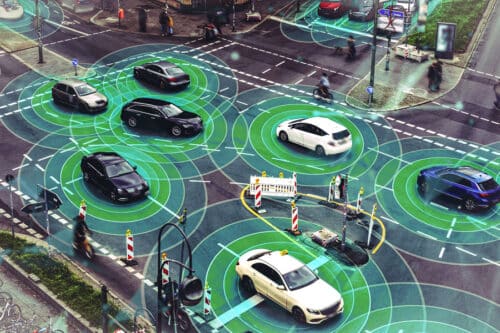
An MIT led modeling study found that AI enabled eco driving, where vehicles adjust speeds to reduce stops and acceleration, could lower carbon dioxide emissions from intersections by 11 to 22 percent across US cities without slowing traffic or reducing safety. Even a 10 percent adoption rate could deliver 25 to 50 percent of the maximum possible cuts, while optimizing speed limits at 20 percent of intersections could achieve about 70 percent of the potential benefits.
The research team used large scale simulations to test phased approaches to deployment. In the near term, eco driving could be implemented through dashboard guidance or smartphone apps, with future integration into semi autonomous and autonomous vehicles through vehicle to infrastructure communication.
The study analyzed more than 6,000 signalized intersections in three US cities using data from OpenStreetMap, US geological surveys, and other sources. Researchers identified 33 factors that influence emissions, including road grade, traffic demand, driver behavior, vehicle age, and signal timing. Over one million traffic scenarios were modeled.
Deep reinforcement learning was applied in a decentralized cooperative multi agent control framework, enabling vehicles to improve energy efficiency without constant communication. Traffic scenarios were grouped by similarities such as lane count and signal phases to train targeted models. Focusing on individual intersections while limiting spillover effects made it possible to run large scale analysis without high computational demands.
Results showed that eco driving vehicles can influence surrounding traffic as non participating drivers often adopt similar driving patterns. In some cases, intersection throughput improved though higher traffic volumes could offset these gains. Safety performance was comparable to human driving but the researchers note that further study is needed on driver behavior changes.
When combined with hybrid and electric vehicle adoption, the benefits increase. For example, in one city, 20 percent eco driving adoption reduced emissions by 7 percent, but with projected EV and hybrid uptake, the reduction rose to 17 percent. The study also found that CO2 reduction aligned with improvements in fuel efficiency, energy use, and air quality, suggesting eco driving could be a low cost and deployable strategy for climate and public health goals.