Probiotics-based biobattery can offer various potential energy uses in medical implants, sensors, and security devices.
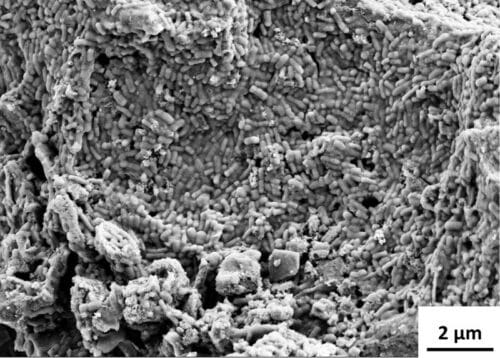
Binghamton University researchers have created a transient biobattery that dissolves harmlessly by using commercially available probiotics. The residue left is beneficial microbes only. The biobattery can be ideal for temporary medical implants, environmental sensors, or disposable security devices. This biobattery is primarily aimed at providing short-term, predefined operations before getting safely disintegrated. The secondary use can support e-waste reduction.
Built on water-soluble or pH-responsive substrates, it uses a 15-strain probiotic blend to generate electricity across various electrode materials. Its construction is simple, resembling layered painting with no need for advanced semiconductors. The researchers have tested the biobattery in various formulations with resistive loads of 100-ohm, 10-ohm, and 1-kiloohm. It uses water-soluble paper made from bio-based wood pulp fibers and natural cellulose, which dissolves on water contact. The wood pulp fibre disperses into microfibers, and cellulose dissolves via hydrophilic interaction.
Power delivery can be tuned from 4 minutes to over 100 minutes by adjusting device length or adding pH-sensitive polymer coatings. Each module produces 4 µW, 47 µA, and 0.65 V, and can be printed or pencil-drawn on dissolvable paper with customizable serpentine electrodes in capillary microfluidic channels for scalable, low-cost production.
Previous non-probiotic microbe-powered biobatteries have worked as standalone power sources but raised concerns over microbial cytotoxicity and health risks. The concerns limited them to disposable, non-dissolvable uses. In contrast, this design employs safe, health-promoting probiotic strains, making it suitable for transient, bioresorbable applications in medical and environmentally sensitive uses.