A new approach replaces rare spin-orbit coupling with magnetic interactions to create stable quantum states for future computing platforms.
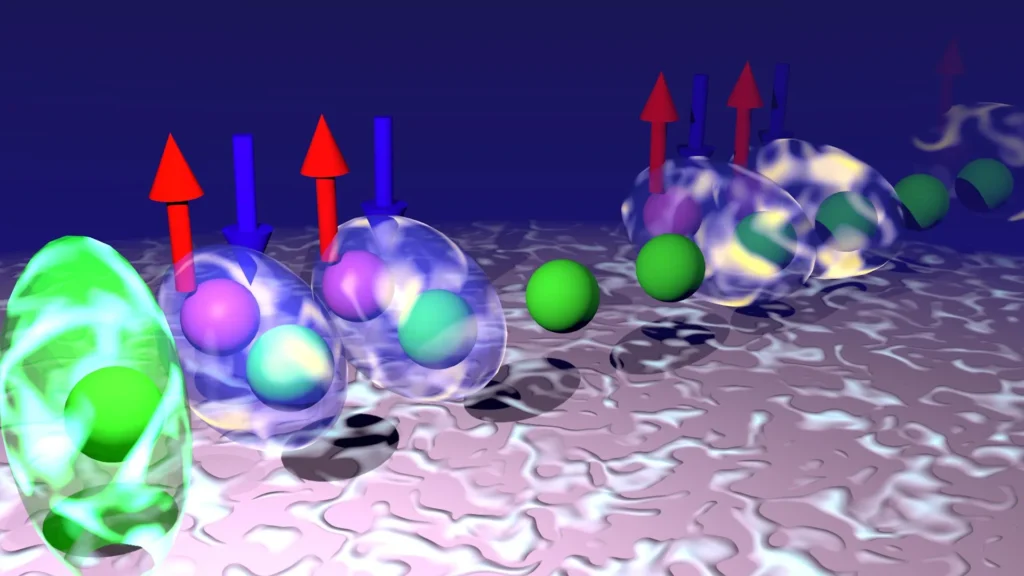
Researchers in Sweden and Finland have developed a new class of quantum material that could help address one of quantum computing’s core challenges: qubit instability. By applying magnetic interactions instead of rare spin-orbit coupling, the team has demonstrated a method for producing stable topological quantum states, improving the resilience of quantum systems to external interference.
The collaboration involves researchers from Chalmers University of Technology, Aalto University, and the University of Helsinki. Their approach leverages magnetism found in many materials, to stabilise qubits using topological excitations, which are known for their robustness against environmental disturbances.
Qubits are the foundational units of quantum computers. However, they are highly sensitive to temperature shifts, magnetic fluctuations, and physical vibrations. These disturbances cause them to lose coherence, making it difficult for quantum computers to perform consistent calculations. Topological quantum states are seen as a solution because they are embedded in the material’s structure and therefore inherently more resistant to such disruptions.
Until now, creating these topological states has depended largely on spin-orbit coupling, a quantum effect that only occurs in a limited range of materials. The newly proposed method circumvents this constraint by using magnetic interactions, enabling researchers to expand their search for viable materials across a broader set of compounds.
The study published in Physical Review Letters also introduces a computational tool designed to evaluate the topological properties of candidate materials. This tool helps quantify the strength of topological behaviour, streamlining the search for new compounds suitable for future quantum computing platforms.