

A chip is changing how AI runs at the edge with high performance and low power while removing the need for cloud. Could this reshape devices?
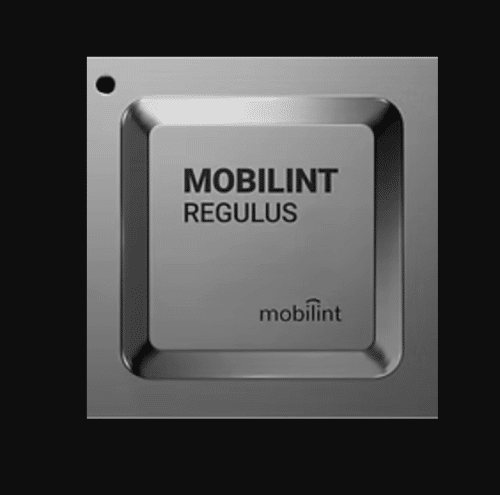
Mobilint, a semiconductor company based in Korea, has introduced the Regulus NPU, a low-power processor that delivers 10 TOPS while consuming only 3 watts. It is designed for Edge AI applications, enabling high-performance inference without dependence on cloud computing or heavy energy use.

The chip is optimised for computer vision workloads, supporting models such as YOLO v8/v9 and MobileNet with low latency. Mobilint has validated it with more than 300 models, while developers can also deploy their own trained networks using frameworks like PyTorch, TensorFlow, or ONNX. The in-house QB SDK includes a compiler that manages quantisation, optimisation, and binary conversion into a Regulus-ready format, making it possible to deploy directly to hardware without changes to existing workflows.
Energy efficiency is central to the Regulus design. By offering 10 TOPS at just 3 watts, the processor supports advanced AI in drones, medical equipment, and other systems that face strict energy and thermal limits. Running AI on the device reduces latency and lowers the carbon footprint tied to cloud data centres. With billions of AI-enabled devices expected in the coming years, low-power NPUs such as Regulus present a scalable way forward.
For developers, the platform is built on a Yocto-based Linux environment with a full board support package, drivers, and support for interfaces including MIPI CSI/DSI, Ethernet, USB, ISP, and audio codecs. Demonstrations have shown multiple models, such as object detection, pose estimation, and face recognition, running simultaneously on a single chip. This flexibility makes the Regulus suitable for both consumer electronics and industrial systems.

The company is also preparing upgrades to extend beyond CNN-based vision into transformer models and LLMs, which could enable natural language processing and multimodal reasoning at the edge. As NPUs evolve into a standard solution for embedded computing, the Regulus NPU offers engineers a balance of performance, efficiency, and ease of development for next-generation intelligent devices.