

A new system called TactileAloha blends vision with touch, boosting robot dexterity by 11% in tricky tasks like fastening Velcro and threading zip ties—paving the way for machines that can finally adapt to messy, human environments.

Researchers from Tohoku University and the University of Hong Kong have unveiled TactileAloha, a robotics control system that fuses sight and touch to give machines a more human-like sense of dexterity. In benchmark tests, the system boosted task performance by 11% compared to existing solutions, marking a notable step toward robots that can adapt to unstructured, real-world environments.
Unlike most robots that rely solely on vision, TactileAloha integrates tactile sensing with traditional camera input. Built on Stanford’s open-source ALOHA (A Low-cost Open-source Hardware System for Bimanual Teleoperation), the enhanced platform mounts a tactile sensor on the gripper. This allows the robot to recognize textures, detect orientation, and adjust its manipulation strategies in real time.
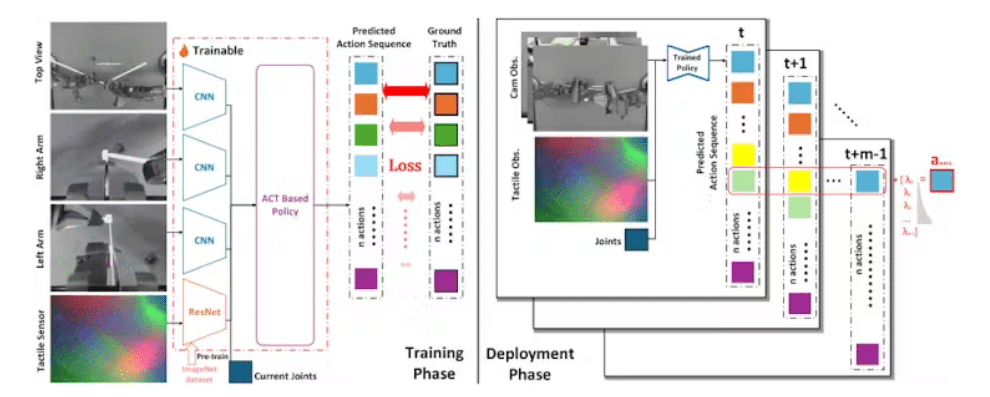
To process sensory data, the system combines tactile signals with visual and proprioceptive inputs. These streams are fed into a transformer-based network that predicts future actions in small steps. Weighted loss functions and temporal ensemble ensure smoother execution. This hybrid approach allows the robot not just to “see” but also to “feel,” making its decision-making far more adaptive than vision-only models.
In practical trials, TactileAloha successfully handled complex tasks like fastening Velcro and threading zip ties—both of which demand nuanced tactile feedback. The robot dynamically adjusted its movements based on touch, a critical step toward machines that can operate reliably in homes, factories, and unpredictable human environments.
While the technology is still far from enabling robots to fold laundry or cook dinner flawlessly, it represents a tangible advance in making robots useful beyond controlled lab conditions. By marrying sight with touch, TactileAloha reduces errors, improves efficiency, and paves the way for robots that can lend a real helping hand in everyday life. For now, supervillains may have to keep waiting for their robot armies. But for the rest of us, this breakthrough hints at a future where robots could handle tedious tasks with the same confidence and finesse as human hands.