

Featuring micro-lead packages with wettable flanks, the devices deliver robust reliability, streamlined assembly, and reduced system costs—offering engineers a flexible solution for evolving vehicle architectures and high-volume production environments.
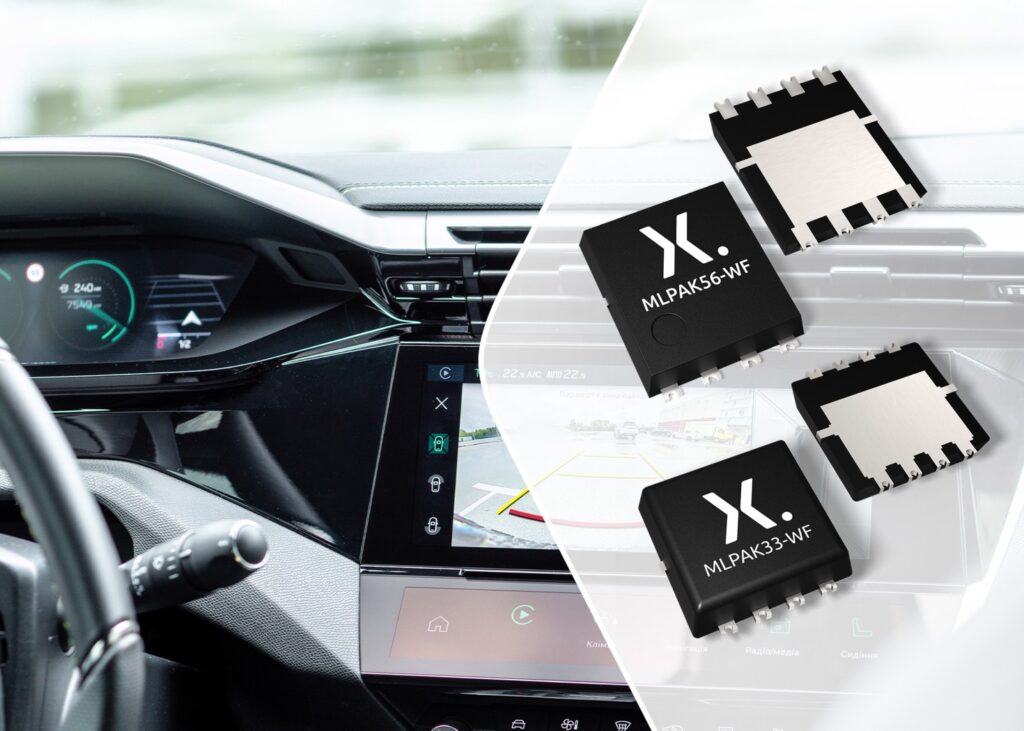
Nexperia has unveiled its first range of 40–100 V automotive-qualified MOSFETs in industry-standard micro-lead packages (MLPAK). Targeting body control, infotainment, reverse battery protection, and LED lighting, the devices promise a cost-effective mix of safety, design flexibility, and manufacturing efficiency—features increasingly vital as cars evolve into electronics-heavy platforms.
The launch includes 19 new devices in the MLPAK33-WF package and the company’s first 40 V option in MLPAK56-WF. Both use wettable flanks (-WF), a feature that ensures reliable solder-joint inspection and supports automated optical inspection (AOI). For designers, this translates into higher assembly yield and greater confidence in high-volume automotive production.
The key features include:
- AEC-Q101 qualified for automotive reliability
- Robust performance with proven board-level durability
- Side-wettable flanks support efficient automated production
- Excellent switching with low spiking and ringing
- High power density for compact designs
- Rugged avalanche performance reduces need for free-wheeling diodes or snubbers
Automotive architectures are rapidly shifting from standalone electronic control units (ECUs) to domain and now zonal control units, consolidating more functions per module. Meanwhile, infotainment and consumer-style in-vehicle features are raising power management demands, creating fresh design pressures on MOSFETs in converters, inverters, and battery systems. In this environment, compact micro-lead solutions offer a compelling balance of performance and cost.
The portfolio spans a range of RDS(on) values and leverages standardized footprints, enabling seamless design-in and simplifying migration between packaging options. Such flexibility supports engineers as they adapt designs to evolving vehicle requirements without major layout changes.
For more details click here.