Physicists have demonstrated a quantum computer with more than 3,000 qubits that can operate stably for over two hours without losing any data.
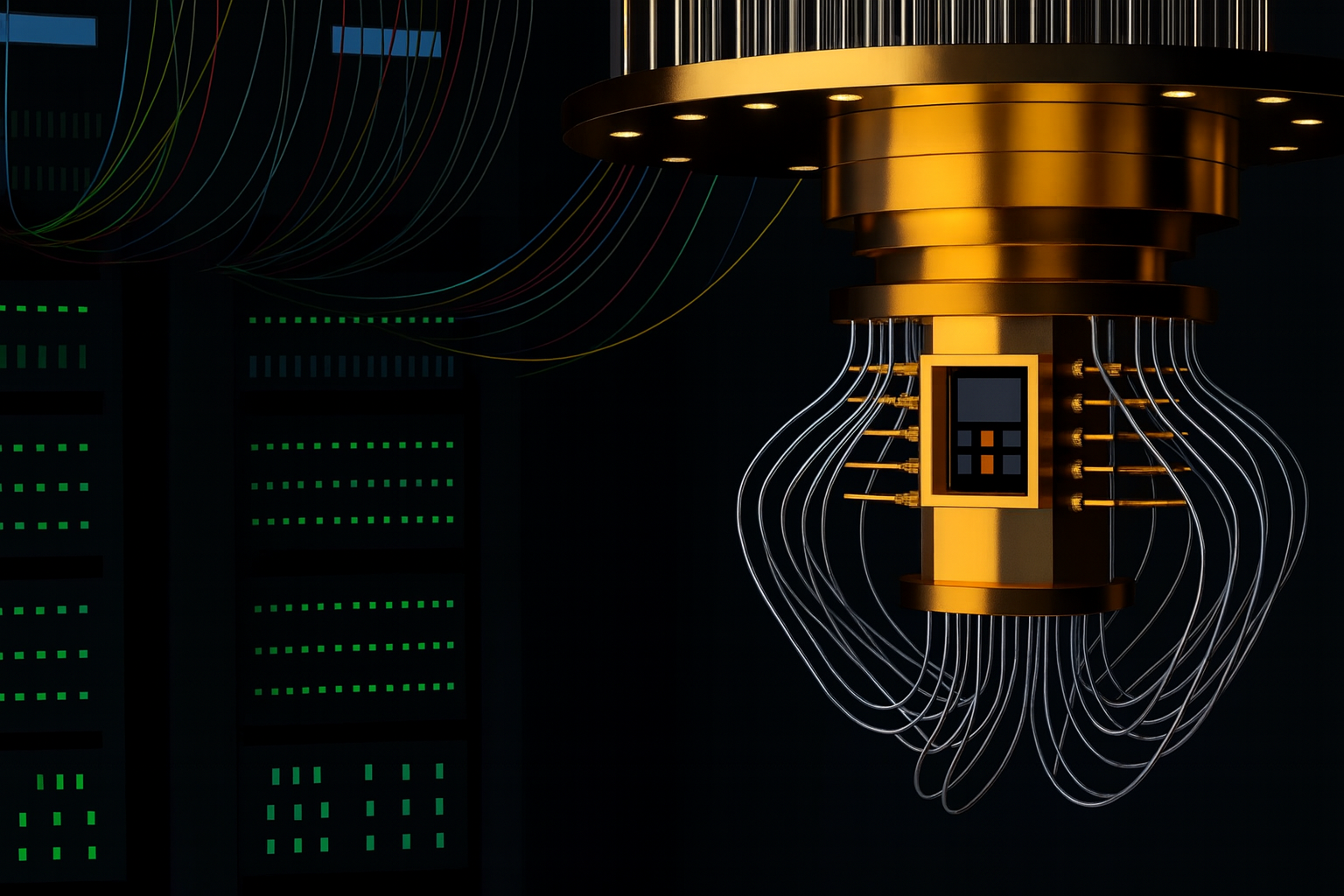
In classical systems, doubling the number of bits only doubles processing power. In quantum systems, each added qubit multiplies potential states exponentially, meaning 3,000 qubits represent computational space far beyond what any binary computer could reach.
Quantum computers differ from conventional machines, which process data as zeros or ones. Qubits can exist as zero, one, or both at once, a property that enables entanglement and exponential scaling.
The challenge has been building large systems of qubits that remain stable for long durations without interruption, as qubits are very sensitive to external factors.
The researchers overcame this by using optical lattice conveyor belts and optical tweezers, by positioning lasers precisely to hit the target qubits atoms. This method can reload up to 300,000 atoms per second, replacing lost qubits without halting the process.
To achieve stability The Harvard-led team used neutral atoms, meaning atoms without being electrically charged. These atoms are good for quantum computing because lasers can easily move and control them.
But physicists got into another problem: information loss. As some atoms escape during operation, the information stored in them is also lost. In earlier experiments, this meant scientists had to stop the system, load new atoms, and start again. This made it impossible for the machines to run continuously.
During the demonstration, the device maintained more than 3,000 qubits for two hours, cycling through over 50 million atoms while preserving information. The approach, in principle, allows indefinite runtime because qubits can be replenished as the system operates.
In related studies, the team also showed reconfigurable atom arrays for simulating quantum magnets and introduced new error-correction techniques. Both advances are essential for scaling towards quantum processors capable of billions of operations.
The results establish continuous operation as a critical feature for quantum systems, showing how neutral-atom designs can combine scale, stability, and adaptability in a single platform.