





Carbon-cement supercapacitors could turn the concrete into massive energy storage systems.
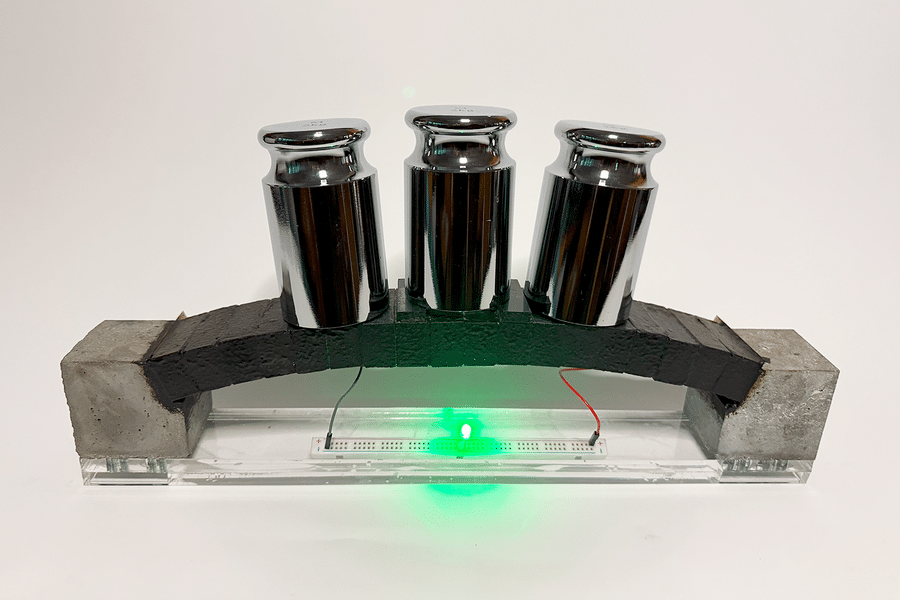
MIT engineers develop a new form of carbon-cement concrete that can store and release electricity, functioning as a supercapacitor. The material, called electron-conducting carbon concrete (EC³), could turn everyday structures into large-scale energy storage systems.
EC³ is made by mixing cement, water, ultra-fine carbon black with nanoscale particles and electrolytes. This combination creates a conductive link that allows the concrete to hold charge. The goal is to enable walls, pavements and bridges to act as both structural and energy-storing elements.
Earlier versions of the material required about 45 cubic metres to store enough power for a single household. Optimised electrolytes now reduce that volume to about 5 cubic metres, which is close to the amount used in a basement wall. The increase in energy density comes from new insights into how the carbon network inside the concrete interacts with electrolytes.
The team used high-resolution tomography to study the nanostructure. They found the network forms a fractal-like web around pores, which helps electrolytes penetrate and allows current to flow. By testing different electrolytes and concentrations, they identified versions that further improved storage capacity.

One cubic metre of EC³ with organic electrolytes can store over 2 kW of energy, enough to power a household refrigerator for a day. Mixing the electrolyte directly during preparation allows thicker electrodes to be cast, removing earlier production limits.
While conventional batteries still hold more energy per unit volume, ec³ can be incorporated directly into long-lasting concrete structures. Tests show it can also act as a monitoring system, with electrical output changing under stress and potentially signalling structural strain.
The findings bring multifunctional concrete closer to practical use. Potential applications include housing, roads and renewable energy projects


