




Researchers develop a magnetically driven milli scale robot that moves against blood flow while delivering drugs and treating aneurysms precisely.
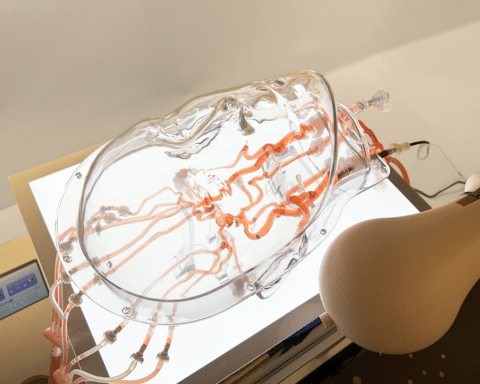
Treating vascular diseases such as thrombosis, atherosclerosis and aneurysms often requires navigating long, narrow and highly tortuous blood vessels. Conventional catheter based procedures can be difficult to control in such environments, especially in cerebral arteries and carry risks such as vessel damage or incomplete treatment. Untethered medical robots have emerged as a promising alternative, but many struggle to move reliably against blood flow or perform multiple therapeutic functions.
Addressing these limitations, researchers from Stanford University have developed a magnetically actuated milli scale robotic device designed for rapid navigation and treatment inside complex vascular networks. The magnetic milli spinner is an untethered robot that can swim through blood vessels under external magnetic control, even against strong and pulsatile blood flow.
The device features a hollow cylindrical structure with helical fins and slits that generate propulsion when rotated. This design allows fluid to pass through the robot, enabling movement without blocking blood flow. Experiments show the milli spinner can reach speeds of up to 23 centimeters per second, making it the fastest reported untethered magnetic robot for tubular environments.
Beyond navigation, the robot supports multiple treatment functions. By adjusting its rotational motion, it can deliver drugs at controlled rates or rapidly release therapeutic agents at a target site. The system was also demonstrated for aneurysm treatment, where it enabled localized embolization using either clot inducing agents or expandable materials.
Key features include :
- Magnetic actuation for wireless control
- High speed swimming in narrow and tortuous vessels
- Hollow structure for propulsion without flow blockage
- Controlled drug delivery using motion based release
- Targeted aneurysm treatment under imaging guidance
The work highlights the potential of multifunctional medical microrobots to improve precision and safety in minimally invasive vascular procedures.


