




New actuation paradigm could reshape flexible devices & soft systems
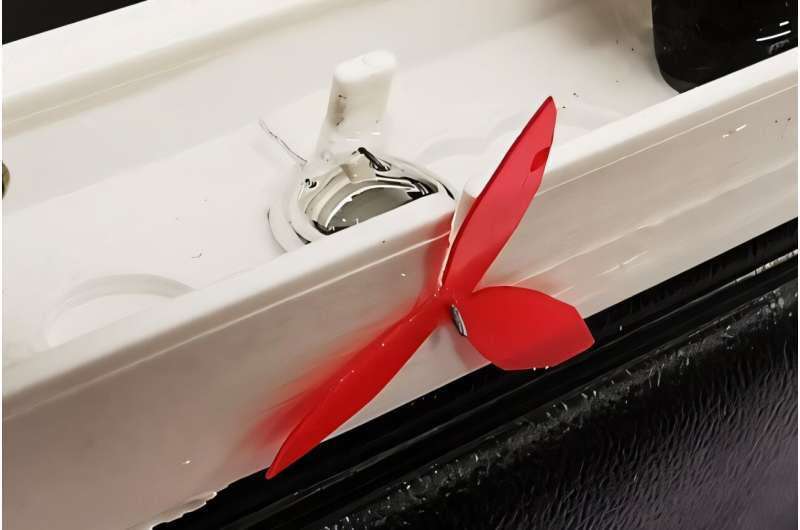
Researchers at the University of New South Wales have unveiled a radically different kind of motor that abandons conventional rigid mechanics in favor of a liquid-metal droplet as the core moving element, a design that could open fresh avenues in flexible electronics, soft robotics and miniature biomedical devices.
At the heart of the advancement is what the team calls a liquid metal droplet rotary paddle motor. Instead of using fixed coils, permanent magnets or mechanical gears, this prototype harnesses electrically induced swirling flows inside a droplet of liquid metal suspended in a salt solution. Those internal vortices carry a tiny copper paddle, translating fluid motion into continuous rotation.
According to the researchers, this mechanism is fundamentally distinct from traditional electromechanical motors. With the droplet exposed to an electric field, the energized metal flows drive the paddle to spin, reaching up to 320 revolutions per minute in early experiments. That performance sets a new benchmark for actuators based on flowing metals and underscores the simplicity and compactness of the design.
Dr. Priyank Kumar, who supervised the project, said the concept proves that motion can be generated without conventional moving parts, potentially simplifying device architecture and boosting integration with compliant systems. The implications for electronics engineering are particularly intriguing. Traditional rotary motors rely on stiff materials and precise mechanical tolerances, which can hamper integration with bendable, stretchable, or irregular form factors. A liquid-metal driven motor could be embedded directly into flexible circuitry or soft robotic structures, enabling motion where rigid components simply won’t fit.

Experts suggest similar designs might one day power microfluidic pumps, implantable medical devices, or adaptive sensor modules, where conventional motors struggle with size, compliance or endurance.
One collaborator pointed out that soft, adaptable motors could allow tiny robots to navigate complex internal environments for instance, within the human body without damaging surrounding tissue. Beyond immediate prototypes, the concept raises broader questions about how electronics and electromechanical systems might evolve when fluids, rather than solids, take on functional roles once reserved for rigid materials. This liquid-metal motor represents both a technical curiosity and a potential platform for entirely new classes of smart machines.


