





Ice on aircraft, drones, and turbines can cause crashes and delays. A sensor spots ice instantly and could change how we handle it.
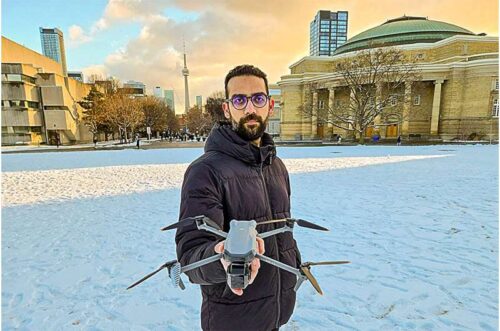
Ice on aircraft, drones, and wind turbines causes serious problems. It can damage vehicles, increase maintenance costs, ground operations, delay flights, and even lead to crashes. For drones, even a thin line of ice on a blade can make them crash, while airplanes face costly, time-consuming, and environmentally harmful de-icing with fluids. Current ice sensors often detect ice at a single point, leaving areas just a few centimeters away unchecked.
To address these issues, researchers at the University of Toronto developed a triboelectric sensor that continuously monitors ice formation. The sensor has two layers, a metal electrode and a thin dielectric plastic coating. When a material contacts or separates from the coating, it generates a sharp electrical signal. Different events, ice forming, melting, or detaching, produce unique signal patterns. The system can also distinguish types of precipitation such as rime ice, which forms in fog or clouds, and freezing rain, which is especially dangerous for aircraft.
Unlike most existing systems, the sensor forms a continuous layer over surfaces, making it more reliable. It is lightweight, simple to fabricate, and can be applied to complex surfaces including airplane wings, wind turbine blades, and small drones. The sensor detects ice cracking or detaching and responds in less than a millisecond. For drones, this allows safe landing before icing causes a crash. Testing with a controlled nozzle system confirmed that drones can fail quickly once ice begins forming, showing the need for fast, real-time detection.
The sensor also has heating potential. The electrode layer could act as an electrothermal de-icing system, melting ice only when detected, conserving energy compared to continuous heating. This could reduce reliance on chemical de-icing, saving time, money, and environmental impact.
Future research will include outdoor drone tests, integrating heating and sensing, and adapting the system for different applications. Design priorities vary, weight is critical for drones but less so for wind turbines. This system represents an initial step toward efficient ice detection and removal for aerospace vehicles and other surfaces, improving safety, reducing costs, and enabling faster operations.

