




When edge systems process data at the source, engineers can observe patterns and behavior in real time, bridging raw vehicle and industrial signals to operational context.
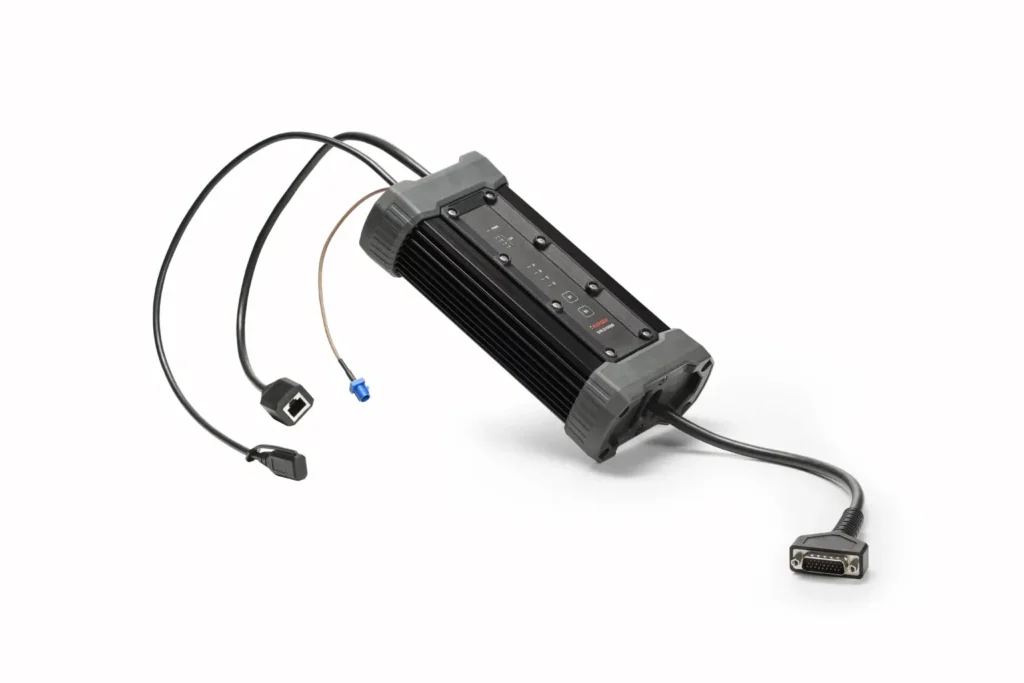
Kvaser has launched Kvaser Edge, a Linux-based edge computing platform for automotive, off-highway, and industrial applications. The system processes data in real time at the source, on vehicles, test benches, or machinery, reducing the need for large logs and PC-dependent workflows.
The platform runs on an ARM-based Linux computer with an integrated Secure Element, providing hardware-level protection for collected data and intellectual property. It supports real-time filtering, aggregation, and anomaly detection, allowing teams to capture only relevant information. Optional GPS adds location awareness for fleet monitoring and operational oversight.
The operating system supports containerized applications, providing isolated, reproducible workspaces for engineers to install preferred distributions and tools. Multiple containers can run in parallel and be updated independently of the base system, enabling consistent deployment across vehicles or test rigs. Processed data can be routed locally or to cloud systems for additional analysis.
Designed to tolerate automotive-grade power conditions and sudden shutdowns, the platform accommodates rapid prototyping and extended deployment scenarios. Potential applications include real-time diagnostics, predictive maintenance, event-based logging, intelligent data filtering, and fleet monitoring for both automotive and industrial equipment.
Early adopters are demonstrating how such an edge platform can streamline development workflows and integrate analytics tools directly at the point of measurement. The containerized architecture allows flexible, scalable deployment while maintaining security and operational reliability.
The edge platform can brings intelligence and security directly to the point of data collection, enabling engineers to process, analyse, and can act on critical information in real time.
