




The power device can lower heat, sustain high current, and support evolving energy demands across modern automotive systems.
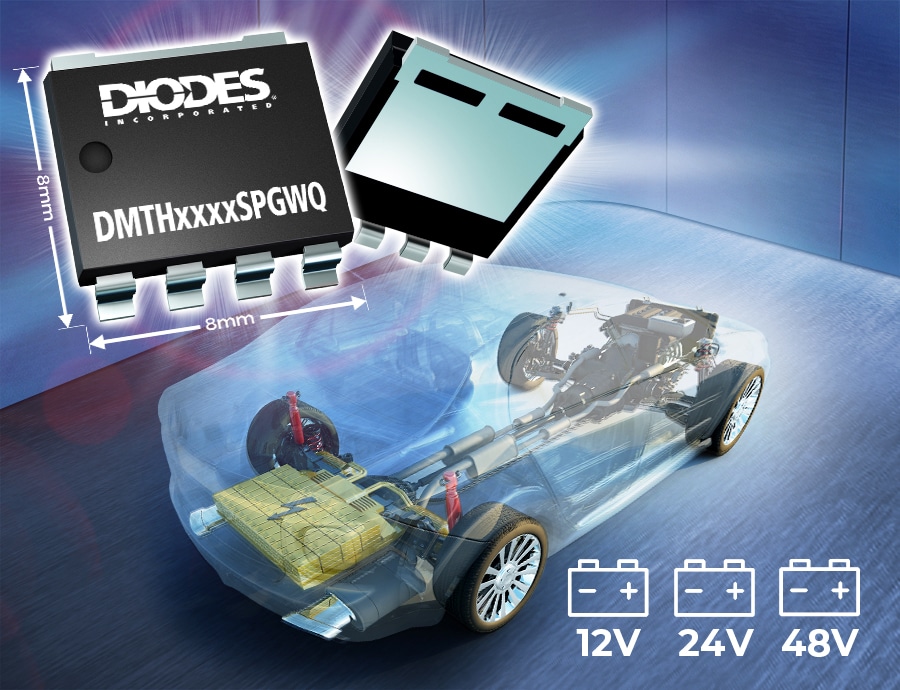
Diodes Incorporated has expanded its automotive power portfolio with a new 100 V N channel MOSFET in its PowerDI8080-5 package, designed for high-efficiency 48 V vehicle systems. The launch also includes 40 V to 80 V variants, aimed at reducing power losses and improving thermal performance in applications such as BLDC motors and DC DC converters across electric, hybrid, and conventional vehicles.
As automotive systems increasingly shift toward 48 V architectures to support electrification and advanced features, power components must deliver higher efficiency within limited space and tighter thermal conditions. This MOSFET family addresses these challenges by combining ultra low R DS(ON) with a compact package, enabling better energy efficiency and reliable operation in demanding environments.
The flagship 100 V device offers a maximum R DS(ON) of 1.5 mΩ, helping reduce power losses in high-current applications such as power steering, braking systems, battery disconnect units, and onboard chargers. The portfolio also includes an 80 V variant and a 60 V option for 24 V systems, giving designers flexibility across different automotive voltage levels.
For lower-voltage use cases, the 40 V variant delivers one of the lowest R DS(ON) values in its class at 0.4 mΩ. A logic-level version operates at 0.64 mΩ with a 4.5 V gate drive, making it suitable for microcontroller-based applications such as actuators, fan controls, and load switches.
From a design perspective, the package MOSFET occupies just 64 mm², around 40 percent smaller than traditional TO-263 packages, enabling more compact layouts. Copper clip bonding reduces thermal resistance to as low as 0.3°C/W, supporting high current handling, while the gullwing lead design improves manufacturability and reliability during thermal cycling.
Together, these features position the MOSFET family as a compact, high-efficiency solution for next-generation automotive power systems.
Click here for the official announcement.

