From closed labs to open testbeds, two indigenous quantum systems quietly shift access, hinting at a deeper transformation in how advanced computing evolves.
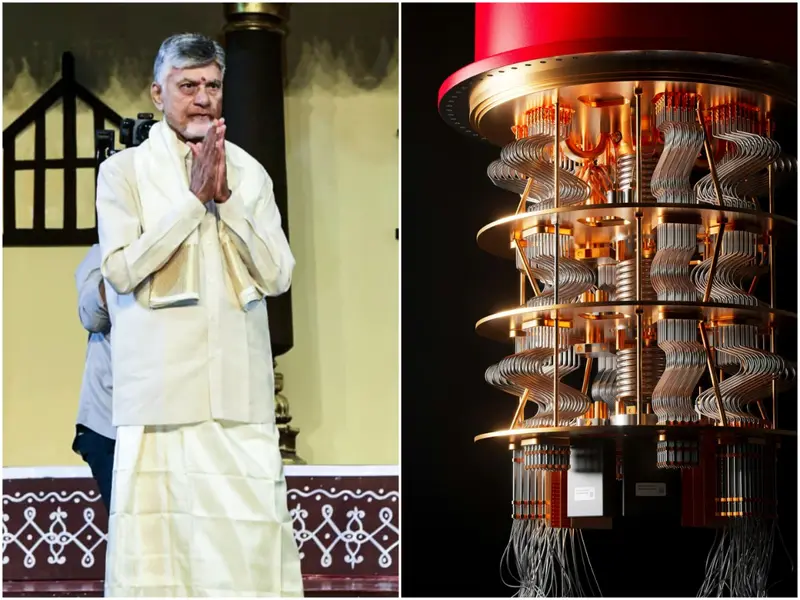
India’s quantum hardware ambitions took a step forward with the commissioning of two indigenously developed superconducting quantum systems, built through a collaboration of startups and research institutions and deployed as open-access testbeds in Amaravati. The systems, known as Amaravati 1S and 1Q, were developed with significant domestic contribution and are designed to function as real-world validation platforms for quantum components.
What sets this development apart is not just the hardware itself, but the open-access model it enables. Unlike conventional quantum systems that remain confined to restricted labs or cloud interfaces, these platforms allow researchers, startups and even students to directly test components such as processors, cryogenic subsystems and control electronics under operational conditions. This hands-on accessibility could reduce entry barriers in quantum hardware research and accelerate experimentation in a field typically constrained by limited infrastructure.
The systems also reflect progress in India’s ability to assemble a near full-stack quantum setup domestically. With contributions from institutions such as the Tata Institute of Fundamental Research, Indian Institute of Science and Defence Research and Development Organisation, the initiative demonstrates growing capabilities in areas ranging from superconducting qubits to control electronics and cryogenic engineering.
The facility was formally launched by N Chandrababu Naidu as part of the broader Amaravati Quantum Valley programme, which aims to position the region as a hub for quantum research, manufacturing and skill development. Within this framework, the dual-system approach is intended to bridge academic research and industrial validation, supporting both experimentation and early-stage commercialization.
“Usually, quantum computers are hidden behind clouds or kept in restricted corporate labs,” says L. Venkat Subramaniam, CEO, qbitforce. “These facilities are different. They are reference facilities where any researcher, startup, or student can bring their own components and test them in a high-fidelity quantum environment.”
Together, the development signals a shift from policy intent to physical infrastructure, with open-access quantum hardware emerging as a foundation for India’s longer-term ambitions in the field.