A tiny change at the solar cell surface could unlock much higher efficiency, stronger stability, and more reliable performance than ever expected.
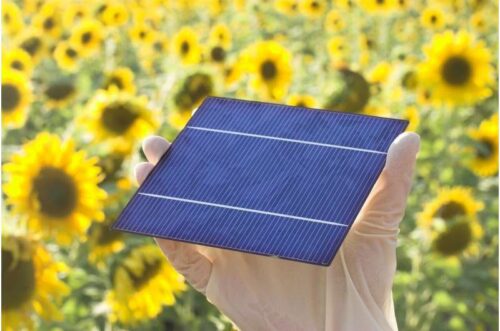
A research team at Ludwig Maximilian University of Munich (LMU Munich) has developed a simple, scalable surface-treatment method for indium tin oxide (ITO) electrodes that improves the efficiency, reproducibility, and long-term stability of perovskite solar cells by optimizing how molecular charge-selective interlayers assemble and function at the interface.
The main outcome is clear: performance is not primarily controlled by maximizing surface hydroxylation, as previously assumed, but by creating a balanced composition of different oxygen species on the ITO surface. This more controlled chemical environment enables self-assembled monolayers (SAMs)—ultrathin organic molecular films that act as charge-selective contacts—to form more uniform, better-ordered, and electronically favorable interfaces.
These molecular interlayers are a key component in modern perovskite solar cells, an emerging photovoltaic technology based on perovskite-structured materials that has rapidly achieved high power conversion efficiencies. SAMs replace thicker, conventional charge-transport materials and are responsible for extracting and transporting electrical charges at the electrode interface. However, their microscopic arrangement and surface coverage on transparent conductive oxide substrates such as ITO have not been well understood, even though they critically influence device performance.
By using a straightforward solution-based treatment, the researchers precisely tuned the chemical and electronic properties of the ITO electrode surface. This improved how SAM molecules bind and organize, leading to more consistent charge extraction and transport across the interface.

As a result, devices show higher power conversion efficiency, improved charge transport, and significantly reduced variability between samples. The improvements are not limited to a single design: the approach works across different perovskite solar cell architectures, including single-junction and tandem solar cells.
In addition to efficiency gains, the treated devices demonstrate enhanced operational stability and strong resistance to thermal stress, maintaining performance under extreme temperature cycling between −80 °C and +80 °C. This level of durability is especially relevant for applications in harsh environments, including potential use in space.
The study reframes the electrode–molecule interface as a central design parameter in perovskite photovoltaic devices rather than a passive boundary layer. The method offers an industry-compatible, scalable route that can be integrated into existing manufacturing processes to simultaneously improve efficiency, stability, and commercial viability of perovskite solar cells.