




Researchers are exploring molecular alternatives that can process and store information beyond conventional silicon-based systems. How?
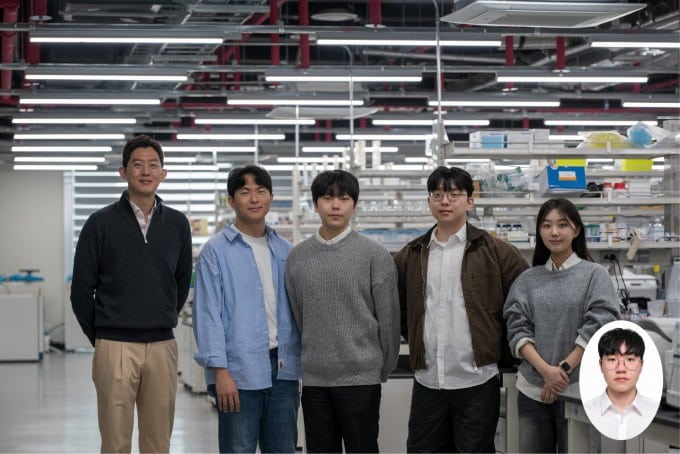
A team at KAIST has developed a DNA-based bio-transistor capable of both computation and memory. The study, published in Science Advances, demonstrates a molecular circuit that processes chemical signals while retaining information from previous states.
DNA has been considered a potential platform for molecular computing due to its programmable base-pair interactions and extremely small structural scale. However, earlier DNA circuits were limited to single-use reactions, where molecules were consumed during computation, preventing continuous operation or memory retention.
To address this, the KAIST team engineered DNA structures that can reversibly assemble and disassemble in response to signals. These dynamic structural changes allow the system to encode and preserve information, enabling sequential computations based on prior inputs.
The mechanism draws parallels with electronic transistors, which process electrical signals while controlling data flow. In this case, the DNA-based system processes chemical inputs and stores results within its molecular configuration, effectively functioning as a bio-transistor.
The work demonstrates the feasibility of integrating computation and memory at the molecular level, potentially enabling more complex biological information processing systems. Such systems could be applied in environments where traditional electronics are impractical, including within living organisms.
Potential applications include molecular-scale diagnostic platforms capable of detecting disease signals and responding autonomously based on embedded logic.
“This work advances the feasibility of molecular computing using DNA and opens new directions for bio-computing and biomedical technologies,” says the lead author Professor Yeongjae Choi of Kaist.


