





A new industrial HMI platform integrates AI-ready processing, 10.1-inch touch display, and secure edge computing to streamline OEM development from prototyping to production across demanding industrial environments.
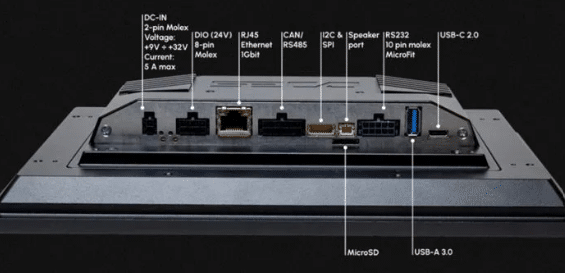
A new modular industrial human-machine interface (HMI) platform has been introduced by SECO, designed to bridge the gap between prototyping and full-scale production deployment in edge and industrial computing applications. The system centers on a 10.1-inch touch-based interface and is built around an AI-capable applications processor with integrated neural acceleration, targeting smart factories, medical systems, transportation interfaces, and industrial automation environments.
The key features are:
- 10.1-inch industrial capacitive touchscreen with 1280×800 resolution and high brightness for field visibility
- AI-enabled multi-core processor with integrated neural processing unit for edge inference workloads
- Ruggedized design with IP-rated front protection for industrial environments
- Embedded Linux-based OS with secure boot, OTA updates, and remote device management
- Modular architecture supporting scalable memory, storage, and application configurations
The platform emphasizes a standardized hardware-software architecture that allows OEMs to reuse the same base system across multiple product generations, reducing redesign cycles and accelerating time-to-market. It is positioned as part of a scalable HMI ecosystem that supports edge AI workloads, secure device management, and long-term lifecycle deployment requirements.
At its core, the system integrates a multi-core processor architecture paired with a dedicated NPU for on-device AI inference. This enables real-time analytics at the edge without relying heavily on cloud connectivity. The HMI is paired with a high-brightness display and industrial-grade capacitive touch panel, designed for visibility and durability in harsh environments.
On the software side, the platform runs a Linux-based embedded operating system that includes secure boot, OTA update capability, and remote device management tools. This makes it suitable for connected industrial ecosystems where cybersecurity and maintainability are critical.
The design also focuses on modularity, allowing OEMs to scale configurations based on performance, memory, and storage requirements while keeping a unified system architecture across product lines.
By combining edge AI capability with a standardized HMI framework, the platform aims to simplify industrial digital transformation while supporting long-term deployment stability across multiple sectors.

