A lithium extraction method uses lower heat, reduces waste, recovers industrial materials, and could lower production costs for battery supply chains.
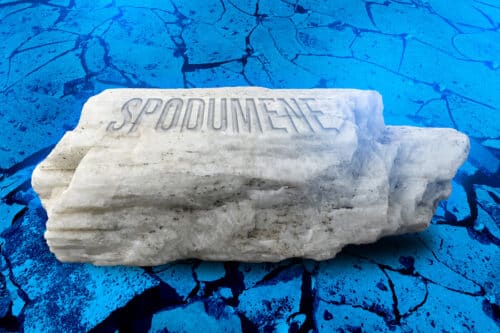
Researchers at the Massachusetts Institute of Technology and partner institutions have developed a lower-temperature process for extracting lithium from hard rock minerals, a method they say could cut production costs, reduce energy use, and reduce mining waste. The process produces battery-grade lithium materials while also recovering alumina and silica as industrial products.
Lithium demand has increased as lithium-ion batteries are used in electric vehicles, consumer electronics, and energy storage systems. Although countries including the United States, Europe, and Australia hold large lithium reserves, China continues to dominate lithium refining. One of the main difficulties is processing hard rock minerals such as spodumene into battery-ready lithium compounds.
Conventional hard rock extraction requires heating spodumene above 1,000°C before using chemical leaching to separate lithium. The remaining rock is discarded as waste. The process consumes large amounts of energy and is generally more expensive than extracting lithium from brine deposits.
The new approach replaces the high-temperature step with a liquid reagent system based on water and ammonium fluoride. Instead of leaving silica behind, as conventional methods do, the researchers dissolved the silica first to break apart the mineral structure at room temperature. The method allowed the team to dissolve spodumene without the heat normally required in lithium refining.
After dissolving the rock, the researchers separated its three main components — lithium, aluminum, and silica — into products. The team produced lithium fluoride, lithium hydroxide, and lithium carbonate, all used in battery production. Aluminum was refined into smelter-grade alumina, while silica was recovered for use in cement materials.
The process was also designed as a closed-loop system. Ammonium fluoride and water used during extraction can be recovered and reused. Ammonia gas released during the reaction is captured and reapplied to regenerate the original chemicals, reducing waste generation close to zero.
Researchers estimate the process could reduce hard rock lithium extraction costs by roughly half, making it more competitive with lithium production from brine sources. The team tested the method on 17 spodumene samples collected from different regions around the world and reported consistent results across varying mineral compositions.
The researchers later evaluated whether the process could scale commercially by studying spodumene supply, energy requirements, reagent recovery, production volumes, and demand for the co-products generated during extraction.