

What goes into producing the same solder joint again and again? Explore how lift-dip soldering manages each step of the process.
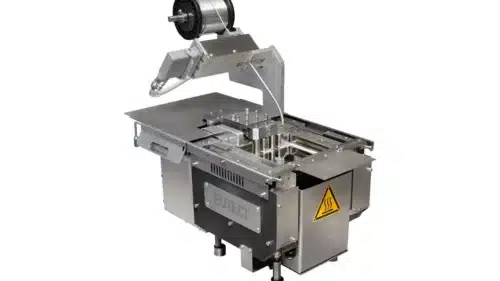
Lift-dip soldering is used for tinning stators, enamelled copper wires, strands, and other components that require controlled solder application. The process supports automated production and different batch sizes while helping manufacturers achieve consistent solder joints. To support this process, EUTECT has developed a lift-dip soldering module with solder bath monitoring, solder management, and process data collection functions.

The system allows control of immersion depth, stroke speed, dwell time, and temperature. These parameters can be adjusted according to the application to produce repeatable solder joints and wetting results.
The module can be integrated into production lines. Together with monitoring and control systems, it can record, document, and analyse production data. This supports process control and quality monitoring during manufacturing.
The system can be used for different assembly types and production volumes. Small batches and larger production runs can be handled using workpiece carriers, solder masks, and process fixtures that position assemblies for repeatable soldering.

During the process, the assembly is immersed into a solder bath. The solder bath operates in a nitrogen-inerted environment, with the nitrogen supply monitored and displayed. A slag container is included in the system, and a scraper removes dross and surface impurities from the solder bath into the container. A scale monitors the container and notifies operators when it needs to be emptied.
The module can also use a product-specific quick-change scoop. A motorised mechanism transfers solder from the bath to the soldering area, allowing solder to be applied to locations where direct immersion may not be suitable.
The solder bath is sealed between soldering cycles to reduce oxidation and contamination. The motorised drive and electronic components are positioned behind the solder bath and separated through thermal isolation. This reduces heat exposure to system components.
The module includes solder bath level control with automatic tin replenishment to maintain the solder volume. The solder bath temperature is monitored through a redundant control system during operation.
Click here for the original announcement.