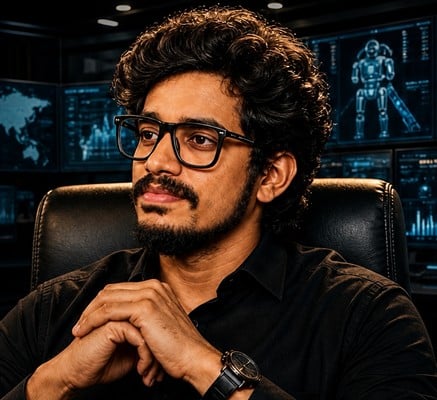
This Indian startup is building humanoid robots from scratch. Athil Krishna of iHUB Robotics speaks with Nidhi Agarwal from Electronics For You about the technology, challenges, and engineering solutions behind developing humanoid robots.
Q. What does your company do?
A. We are an India-based humanoid robotics startup focused on developing physical AI powered humanoid robots. Our work includes both service humanoids and general-purpose industrial humanoid robots designed to address challenges across various sectors. Founded in 2022, we launched our first semi-humanoid robot, Tara Generation 1, in 2024. We are also the first Indian company selected for the NVIDIA humanoid robotics program. We operate with fully in-house capabilities, including fabrication, embedded systems, fine-tuning, development, and design, and have a team of around 65 employees in India.
Q. Where is your headquarters, and in which other countries do you operate?
A. Our headquarters are in Kerala, India, specifically in Ernakulam, Kochi (Elapalli), and all our manufacturing and production take place at our Gigafactory in Kalamassery, Kochi. In addition to India, we are actively operating in the UAE and Saudi Arabia, where we have deployed multiple robots, including projects for the UAE government and Sharjah Police. We have also started expanding into the United States, with our first product shipment planned this month. While our manufacturing is fully based in India, we do have a sales and service support office in the United Arab Emirates to support our international operations.
Q. What inspired you to start your startup, and is there any story behind the startup or its name?
A. Our journey started in 2018, during the first year of engineering. We were passionate about humanoid robotics and began researching the field while studying mechatronics in Coimbatore. For nearly three years, we worked through multiple challenges, but at that time the ecosystem and technology were not mature enough to support advanced humanoid robotics. During this phase, we also submitted proposals to the government on the role of humanoid robots in defence, and in 2020 we received responses from BSF and the PMO, with BSF showing interest in our concept. But COVID disrupted our progress. In 2022, we restarted with iHub Robotics—which stands for Innovation Hub for Robotics.
Q. Can you tell us about your products and what makes them different?
A. We have two flagship humanoid robotics products: Tara and Daksha, designed for different application layers. Tara is a service-oriented humanoid for customer-facing and operational environments. It supports communication in 100+ languages, human-like interaction, and autonomous navigation across large indoor spaces of up to 400,000 square feet. The Tara Generation lineup, launched in 2024, includes three variants—Tara Greet, Tara Learn, and Tara Care—targeted at healthcare, education, and office use cases, with around 35 units already deployed across three countries.
Daksha is a next-generation industrial humanoid built for heavy-duty applications. It can handle payloads up to 25 kg, operate at heights of 8–10 feet, and is designed for complex industrial deployments. Its core intelligence is based on a VLA (vision-language-action) orchestration system that enables perception, instruction understanding, and action execution through multiple expert modules integrated with LLMs for perception, decision-making, and feedback processing. A continuous feedback loop allows performance improvement over time.
Alongside software, Daksha incorporates in-house actuators and sensor systems for balance, precision, and movement, built on a proprietary three-layer hardware-software architecture that enables tasks like picking, assembly, and autonomous navigation. The entire ecosystem is coordinated through the Viveka Decision Orchestration System, which manages system-level control across modules and products. Launched at the Indian Impact Summit, Daksha is currently undergoing multiple proof-of-concept deployments with global enterprises and is attracting growing interest from India and international markets.
Q. Who are your target buyers for these robots?
A. Our target buyers include research institutions, IT companies, and government organisations, who are currently using our robots for learning, service applications, and model development. A major focus area is healthcare, where hospitals are key customers. We are preparing our first healthcare deployment in the US, where rising nurse costs (around $75–$85 per hour) and workforce shortages are driving demand. Our robots can assist in patient rooms, communicate in natural language, detect behavioural changes, and help with tasks such as medication delivery.
Another major market is industrial manufacturing, especially automobile production, which forms a large share of our customers due to its need for continuous, automated operations. We also serve the logistics, packaging, assembly, and skilled labour sectors, such as construction and cutting work. Overall, our robots are designed as general-purpose humanoids for use across healthcare, research, government, IT services, and large-scale industrial environments.
Q. What is the general cost range of human-like robots such as Tara or Daksha?
A. The cost of the robots varies based on the version and use case. For example, Tara Generation 1 includes different models such as a healthcare care version that can monitor patients, dispense medicine, assist with appointments, and provide basic counselling, with pricing depending on customisation and required precision—entry-level systems start at around $10,000 USD, while more advanced or specialised configurations, such as high-precision industrial or semiconductor applications, can go up to $20,000–$25,000 USD or more. In the broader market, humanoid robots currently cost about ₹10 million to ₹15 million in the US and around ₹6.5 million to ₹7.5 million in China, with the long-term goal of bringing the price of a general-purpose humanoid robot down to below ₹2 million.
Q. In developing a humanoid robot, what parts are you building in-house and what are you still dependent on external technology for?
A. The system is a combination of hardware, software, AI, and VLA (vision-language-action) models. On the software side, about 90% is developed in-house, while the remaining 10% relies on open-source tools and frameworks such as NVIDIA’s VLA (vision-language-action) models, which help as a foundation for this fast-evolving technology. On the hardware side, around 71% has been developed through in-house engineering and business development, and the goal is to reach 92–95% within the next two years. However, full independence is difficult because high-performance compute boards like NVIDIA’s 2000 TOPS systems are still required, as India currently lacks equivalent robotics-grade hardware (locally available systems are around 11–12 TOPS).
For actuation, the team initially sourced motors externally but is now developing its own actuators to reduce dependency. Significant R&D is underway in a ‘deep tech’ division focused on advanced components, such as high-torque 1350NM motors. While progress is steady, some reliance on external ecosystems remains necessary due to the complexity and computational demands of humanoid robotics.
Q. What exactly is VLA, and how is it different from a large language model (LLM)?
A. An LLM is designed to understand and generate language. Generative AI has evolved from text-to-text systems to text-to-image and text-to-video, and is now moving toward prompt-to-action systems, where models perform real-world tasks based on instructions. This is where VLA models emerge. Unlike LLMs, which function as language and knowledge systems in the digital domain, VLAs integrate vision, language, and action—combining perception, reasoning, and motor control. Sensors capture the environment, the model interprets instructions, and a robotic system executes actions.
The key difference is that LLMs operate in digital space, while VLAs operate in the physical world. For example, answering a math question is easy for an LLM, but tasks like picking up a glass require object detection, spatial reasoning, motion planning, and precise execution under uncertainty. This makes VLAs significantly more complex due to real-world dynamics. A related area, vision-language navigation (VLN), uses vision and language to navigate environments and choose paths. Both VLA and VLN require large-scale real-world data and tight system integration, making them difficult to build, and only a few groups, such as Figure AI and Google DeepMind, are actively working on them. The goal is to move AI from generating information to performing physical actions in the real world.
Q. What are the key design challenges in developing VLA and VLN from scratch, and how do you address them?
A. Developing VLA and VLN from scratch is challenging mainly because of the extreme complexity in both computation and data requirements. These models need large-scale research, advanced technology stacks, and massive computational resources, often involving GPU clusters running at industrial scale. Organisations like Google DeepMind and Figure AI use thousands of GPUs, including high-end hardware such as NVIDIA H200, to train these systems. Another major difficulty is data—training even a simple robotic skill like picking up a glass can require 3000–5000 hours of data collection and training, making dataset creation and training pipelines extremely expensive and time-consuming.
To address these challenges, we focus on building efficient expert systems within VLA, particularly for object detection and object mapping, rather than relying on extremely large-scale models. While many companies work with 100B–200B-parameter models that require substantial cloud infrastructure, we prioritise lightweight models that can run on limited GPU clusters, such as those based on NVIDIA’s Blackwell GPUs. This approach allows us to deploy models locally on hardware without relying heavily on cloud transfers, reducing latency, costs, and infrastructure dependencies while still maintaining practical performance for real-world robotic applications.
Q. What were the main design challenges in building humanoid robots and how did you overcome them?
A. Designing humanoid robots like Tara and Daksha involved major challenges because the human body itself is extremely complex to replicate. It required deep work in mechanical design and kinematics, along with extensive research and multiple rounds of prototyping before reaching a stable design. On the hardware side, managing many joints required multiple motors with precise control, accurate voltage regulation, and reliable feedback systems to ensure coordinated movement, making the system highly complex.
Another key challenge was integrating high-end computational systems with the hardware and adding AI-based intelligence for smart behaviour and decision-making. To overcome this, the team developed several critical components in-house over the past few years, including control boards, battery management systems, and body parts, which improved integration and performance. Continuous R&D, iterative development, and a strong focus on building core technology internally helped address these challenges and accelerate progress.
Q. How do you achieve stability and balance in humanoid robots while they perform tasks?
A. Stability and balance in humanoid robots are achieved through advanced control systems and extensive training, with our R&D team continuously working on models that often require large amounts of data, sometimes 3000 to 5000 hours per task, which is a major challenge. To address this, we’ve developed proprietary technology stacks and an AI orchestration system that can generate large-scale synthetic datasets from limited real-world samples. In addition, we use multiple training approaches such as teleoperation and leader–follower arm mechanisms. By combining these methods with our data generation and learning systems, we aim to significantly reduce training time while ensuring consistent stability and balance across a wide range of tasks.
Q. What kind of battery systems do your humanoid robots use, and how do they manage charging?
A. The humanoid robots use lithium-ion batteries. They are designed with autonomous recharging capability, meaning that when the battery level drops below 10%, the robot automatically returns to a charging dock, recharges, and then resumes its work. This feature is available in both Tara and Daksha robots. We are also developing battery-swapping technology, in which the robot can automatically replace a depleted battery with a charged one.
Q. What technical challenges do you face in real-time coordination between AI and robot hardware?
A: The main technical challenge in real-time coordination between AI and robot hardware is training, especially because the entire technology stack is evolving very rapidly with frequent updates, making it hard to keep pace; at the same time, major competitors like Figure and Agility Robotics have raised billions of dollars and have access to large compute clusters such as H200 GPUs and strong talent pools, which puts additional pressure on building similar capabilities with limited resources, so significant effort goes into optimising and developing an in-house technical stack to handle these constraints, though that stack remains confidential.
Q: Have you developed unique modules or APIs to make your robots more adaptable or scalable, and have you filed any patents for them?
A. Yes, definitely. That capability is part of our VLA Viveka decision-core AI system, a key advantage of our platform. In terms of intellectual property, we have applied for patents across all our products. So far, we have filed around seven patent applications, but none have been granted yet—they are still under review.
Q. What is the testing and validation process for robots, and how do you ensure they work accurately in the real world?
A. The testing and validation process involves both virtual simulation and real-world testing. First, robots are trained and tested using software simulations with large amounts of training data to check performance in controlled environments. This helps ensure they understand the tasks correctly and follow instructions before being deployed in person.
After simulation, the same tasks are tested in real-world industrial setups, such as factory environments. Here, robots perform actions like picking and placing objects, detecting errors, correcting them, and repeating the process. This combination of simulation and real-world testing ensures precision, reliability, and proper task execution in actual working conditions.
Q. What matrices or systems do you track to ensure reliability and ecosystem safety in humanoid robots, and how do you make sure they are safe for humans and the environment?
A. In humanoid robotics, reliability and safety are managed through a layered architecture system. While most companies use a two-layer setup (System 1 and System 2), we use a three-layer architecture: System 0, System 1, and System 2. System 0 is a dedicated safety and policy layer that ensures the robot cannot harm humans and always follows strict behavioural rules. It also controls how the robot interacts with people, ensuring respectful communication and appropriate responses when a request cannot be executed safely or correctly.
On top of this, System 1 and System 2 handle perception, reasoning, and decision-making for tasks. We also use a real-time orchestration system with a digital twin that continuously receives data from motors and sensors every second. This helps monitor performance, detect issues early, and maintain both operational reliability and ecosystem safety throughout the robot’s activity.
Q. Is your robotics company profitable? What is your revenue status and funding situation?
A. We are currently a slightly profitable deep-tech robotics company. In the early years, we faced losses, but over time we stabilised and reached a sustainable, marginally profitable position. Our exact revenue for the last financial year is confidential because we are currently in an active funding phase. In 2024, we raised around ₹45 million from US-based angel investors, which significantly helped with prototyping and infrastructure development. We are currently in a seed funding round.
We have not yet received any direct government funding, but we are applying for research grants and collaborating with government agencies to secure future support. Alongside investor funding, we also used internally generated income to continue development. Our team worked extensively over the years, going through more than 60 prototype failures before launching our first product in 2024, which marked a major breakthrough and led to strong international traction, including recognition among the top 100 emerging robotics startups globally in a 2025 US robotics report, where we were the only Indian company listed.
Q. What are the current challenges you’re facing as a startup while trying to grow fast?
A. The main challenge we are facing as a startup is keeping up with the speed of technological development while doing deep research in human robotics, especially when compared to big companies that have much larger financial resources and can easily attract top talent. We also face the issue of talent retention, as some foreign companies try to acquire our core team members, which makes it difficult to maintain stability. At the same time, building humanoid robotics itself is highly complex and requires continuous innovation and strong technical execution. Despite these challenges, we have very strong clarity and conviction about our vision, as we believe humanoid robotics is a massive future market that can transform industries like space exploration, defense, and large-scale environmental operations, where robots could help build ecosystems on Mars or the Moon, explore oceans, and support national security.
Q. What are the main challenges you faced while setting up a humanoid robot manufacturing facility in India?
A. The biggest challenge is infrastructure, because building and training humanoid robots requires very high-cost facilities, and funding is difficult since investors often hesitate to put in large R&D-heavy capital. Another major issue is limited access to advanced hardware, such as NVIDIA H100 and H200 GPUs, due to international restrictions, making it hard to access the most powerful computing resources in India. Additionally, there is a shortage of highly skilled talent because the technology is evolving much faster than the current education system can keep up with. These combined challenges- funding, restricted hardware access, and talent gaps- make development and scaling very difficult, especially for advanced R&D and gigafactory-level production.
Q. What types of machines and equipment are required in your manufacturing plant in Kerala to build humanoid robots, and what do you currently have or plan to add in the future?
A. To build humanoid robots from scratch, the manufacturing plant requires a combination of advanced precision manufacturing equipment and high-performance computing infrastructure. On the manufacturing side, this includes advanced CNC machines, metal-cutting systems, and laser-cutting machinery for high-precision component fabrication. On the intelligence and computing side, it requires very high-end CPUs and large GPU clusters to support AI development and robotic control systems.
Currently, the setup uses around 3-4 GPUs for computation. The future plan is to scale this significantly by deploying around 100 Blackwell GPUs within the year to build a much larger in-house GPU cluster. In addition, there is a plan to invest in more advanced, high-end cutting machinery, particularly for manufacturing critical components such as actuators.
Q. How did you approach exporting your humanoid robots to global markets like the UAE and Saudi Arabia, and what regulatory hurdles have you faced?
A. We haven’t faced major regulatory hurdles in exporting our humanoid robots to markets like the UAE and Saudi Arabia because we mainly deploy them with government clients, and they are comfortable as we strictly follow all safety protocols and do not collect or store any data ourselves, with all data being handled on the government side; however, we do face some logistical challenges, particularly from India’s export restrictions on certain components like batteries, which makes shipping difficult, but despite these issues we are moving forward and are currently in final discussions with the government of Qatar for deploying our humanoid robots there as well.
Q. Are you currently involved in any industry-academia tie-ups, and are you also looking for new partners or channels?
A. We already have strong industry–academia tie-ups. In the last three months, we signed MOUs with 6–7 major companies, including top Indian firms. We also have partnerships with global companies such as EY Global and SAP Germany, as well as several other Indian IT companies (some under confidentiality agreements). In addition, we are setting up an industrial human research centre in Bengaluru where joint R&D work will begin next month.
We are also looking to expand further by adding new channel partners across India. The focus is on the education sector to build a strong talent pipeline and establish excellence labs in colleges and universities, including in areas such as humanoid robotics. Since this field has strong global demand and significant opportunities, especially for high-value roles in countries like the US, we want to collaborate with industry partners to align education with practical industrial needs and bridge the current skills gap.
Q. What is your competitive landscape for humanoid robots in India and globally, and how do you differentiate yourself?
A. In India, we don’t really view other robotics companies as direct competitors; instead, the ecosystem is still emerging, and most players are seen more as collaborators or ‘brothers’ working toward the same goal of building the humanoid robotics space together. There are startups emerging in places like Bengaluru, and some well-funded Indian-origin companies working in humanoid or embodied AI, but the focus here is more on growing the category than competing within it.
Globally, our benchmarks include Tesla’s Optimus, Figure AI, and leading Chinese robotics companies. We also see some well-funded US-based players in this space. However, we differentiate ourselves by using lower-cost approaches, not relying heavily on user data collection as some US companies do, and by building our own full technology stack in-house. We also see robotics as a massive future market, potentially worth tens of trillions of dollars over the next 20 years, spanning areas such as healthcare, space, and industrial applications, so collaboration will be as important as competition.
Q. What are your plans for future growth in terms of investment, hiring, and expansion strategy?
A. Right now we don’t have a large dedicated sales team because most inquiries come directly from clients who approach us with their requirements and we provide tailored solutions, but going forward we are planning to build structured sales channels starting next month focused on the European and US markets, along with opening an office in the US to strengthen our presence across North and South America; in Europe we are already scaling, and in the GCC region we have strong client relationships especially in the UAE, while on the production side we currently have the capacity to produce around 300 units of human oil per month and our goal is to fully utilise and scale this capacity over the next two years, with the overall vision of expanding globally and delivering advanced indigenous human oil solutions to international markets.
Q. How are you improving the next generation of robots?
A. We are developing third-generation humanoid robots focused on defence applications and moving toward physical AGI, aiming to create highly intelligent systems with extremely strong capabilities, including advanced payload handling and real-world autonomy. At the same time, we are scaling large-scale deployment of humanoid robots, with around 50–55 units already deployed across India and China. Our growth has accelerated significantly, and we aim to reach 500 deployments this year, making us one of the fastest-growing manufacturers and deployers of humanoid robots.
Our broader mission is to build advanced robotics technology in India, especially in areas considered strategically important. We emphasise developing indigenous solutions to reduce dependency on foreign humanoids, given concerns around sensitive environmental data. We follow a strict privacy approach: we do not collect client or ecosystem data; only internal robot feedback is used to improve performance through a controlled learning loop, ensuring robots improve without exposing external information.
Q. How do you see the future of humanoid robots in the coming years, and what technologies could change how they are being developed today?
A. The future of humanoid robots is expected to be extremely large and fast-growing, potentially evolving into a multi-trillion-dollar market over the next 15–20 years. A key reason for their importance is that they are built for human-centred environments, meaning they can operate in spaces like homes, factories, logistics systems, and vehicles without requiring major redesigns of existing infrastructure, making them highly practical and scalable across industries.
In terms of capability, humanoid robots can already outperform humans in specific areas such as strength, endurance, and repetitive task execution, which is driving strong interest from sectors like manufacturing, logistics, automotive, and e-commerce. The biggest leap forward will come from advances in multimodal AI systems, improved robotics hardware such as actuators and lightweight materials, better battery technologies, faster onboard computing for real-time decision-making, and simulation environments that allow large-scale learning. Together, these developments are expected to significantly accelerate real-world deployment and mass adoption of humanoid robots.
Q. What changes would you suggest for improving the education system in India, especially regarding emerging technologies and human rights-related talent development?
A. India’s education system needs continuous and structured reform to keep pace with rapidly evolving technology and to better develop talent, including in areas like human rights and emerging tech. A key suggestion is to create a national-level council composed of industry experts, researchers, engineers, and founders who actively work in fields such as AI, robotics, and advanced computing. This council should be responsible for reviewing and updating the syllabus annually so that students learn relevant, up-to-date skills such as AI development, model building, and modern system design, rather than outdated content.
There is also a major gap between school and college education. While schools are starting to introduce basic AI and robotics labs, many engineering colleges still rely heavily on theory with very limited practical exposure to modern technologies and advanced hardware. This gap needs to be fixed by improving infrastructure and making hands-on, project-based learning compulsory in colleges. Regular syllabus updates, stronger industry collaboration, and a shift toward practical learning are essential to build innovation, strengthen skills, and move toward a more self-reliant and technologically advanced India.