



As high-speed PCBs become more complex, finding SI, PI, and EMI issues after fabrication can be costly. HyperLynx EDS helps engineers detect and fix these problems early through simulation and verification. Its latest DDR5, automation, and power integrity enhancements enable faster development of reliable electronic products.
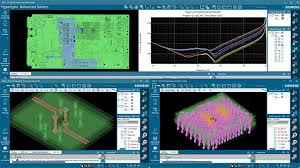
As PCB designs continue to push into multi-gigabit data rates, faster DDR memory, and increasingly dense layouts, ensuring signal and power integrity has become just as important as the circuit design itself. This is where HyperLynx EDS (Electronic Design Simulation) from Siemens EDA comes in. HyperLynx is a simulation and verification platform that helps electronics engineers predict signal integrity (SI), power integrity (PI), electromagnetic interference (EMI), and design-rule violations before a PCB is manufactured. Instead of discovering issues during hardware testing—when redesigns can be expensive and time-consuming—engineers can identify and fix potential problems during the design stage itself. The software is widely used for high-speed digital designs involving DDR memory, PCIe, USB, Ethernet, SerDes links, and complex power-delivery networks. By combining pre-layout and post-layout analysis, HyperLynx helps engineers reduce board re-spins, improve reliability, and accelerate product development cycles.
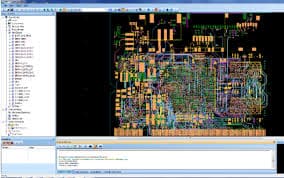
Some of the major capabilities offered by HyperLynx include:
• Signal Integrity analysis for high-speed interfaces
• Power Integrity and DC voltage-drop analysis
• DDR4/DDR5 compliance and timing verification
• Crosstalk and impedance analysis
• Electromagnetic interference (EMI) prediction
• Automated Design Rule Checking (DRC)
• Advanced 3D electromagnetic field solvers
• IBIS, SPICE, and S-parameter model support
• Batch simulation and design optimization workflows
• Integration with PCB design environments such as Xpedition
The latest major release, HyperLynx 2504, introduced in April 2025, focuses heavily on automation and productivity improvements. One of the most significant enhancements is expanded support for DDR5 and DDR5X memory technologies, enabling engineers to verify next-generation memory interfaces more effectively. Siemens has also streamlined power-network setup workflows, reducing the effort required to perform power-integrity analysis. A new schematic model wizard automatically generates passive and connector models, addressing one of the biggest challenges engineers face while setting up simulations. The release further reintegrates several DRC capabilities that were previously available only in legacy workflows and introduces improvements in enterprise data management for better collaboration across design teams. For engineers working on large and complex boards, these additions translate directly into faster setup times and more accessible simulation workflows. More recent updates in the HyperLynx roadmap have also introduced enhanced schematic analysis, automated model-property resolution, and alternative component identification features to help address supply-chain-driven component substitutions.
What makes HyperLynx particularly interesting is the feedback it receives from engineers who use it in production environments. Across technical forums and engineering communities, users consistently highlight its ability to answer common SI/PI questions quickly without requiring lengthy simulation cycles. One engineer mentioned that “The DDR4 wizard is very slick and powerful.” “HyperLynx SI/PI was always the tool we went to when we needed quick answers for common signal-integrity questions.”said another user. A design engineer said “HyperLynx works great if you are using the rest of the Mentor Graphics suite.”
Not all feedback is entirely positive, however. Several engineers mention that HyperLynx has a noticeable learning curve, particularly for advanced SI/PI analysis. Some users describe the setup process as demanding for first-time users, although they acknowledge that the automation tools introduced in recent releases are helping reduce this complexity. Overall, the consensus is that HyperLynx remains one of the industry’s most capable PCB simulation platforms, especially for engineers working on high-speed digital systems.
For students, researchers, and engineers evaluating the software, Siemens offers educational and evaluation licensing programs that allow users to explore HyperLynx without committing to a full commercial deployment. The evaluation editions are primarily intended for learning and proof-of-concept work and may include limitations on project size, simulation scope, or advanced analysis features. Commercial licenses unlock the complete HyperLynx portfolio, including advanced SI/PI analysis, EMI verification, DDR compliance checking, enterprise data management, and 3D electromagnetic solvers. While the full version targets professional engineering teams, the availability of evaluation and academic access makes it easier for engineers to develop simulation skills before moving into production environments. For organisations designing high-speed PCBs, HyperLynx remains one of the most comprehensive solutions for virtual design verification before hardware fabrication.


