





Electronic devices produce more heat as they become more powerful. A new bacteria-based material could offer a better way to keep them cool.
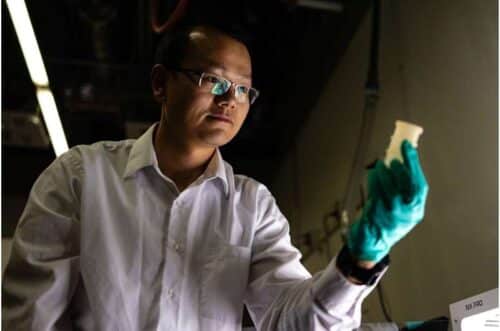
Researchers at the University of Tennessee, Knoxville have developed a bacteria-based method for making thermal interface materials that help remove heat from electronic devices. The new material showed thermal conductivity five to ten times higher than conventional thermal interface materials while using a manufacturing process that operates at room temperature and in water. The approach uses microbial biosynthesis, where bacteria produce useful materials from simple ingredients such as sugars and metal ions.

Thermal interface materials are placed between electronic components and cooling systems to fill microscopic air gaps and improve heat transfer. Efficient heat removal is becoming increasingly important as computers, power electronics, energy storage systems, and other devices generate more heat during operation.
According to the researchers, certain bacteria can produce both inorganic and organic materials when supplied with appropriate nutrients and metal precursors. Unlike conventional manufacturing methods that often require high temperatures and chemical processing, the bacteria-based process takes place in an aqueous environment at room temperature.
The research was supported by efforts to develop high-performance and environmentally friendly thermal management materials for electronics and energy storage applications. Such materials are important for a range of systems, including military equipment, batteries, and power devices.
Most existing thermal interface materials are produced using synthetic material mixtures and face limitations related to performance and sustainability. The new approach combines microbial biosynthesis with advanced manufacturing techniques to create materials with improved heat-transfer properties.
The researchers believe the concept could also be applied beyond thermal management. Related work is underway on recovering rare-earth elements and developing materials for biomedical and tissue-engineering applications.
The next phase of the project focuses on reducing production costs and increasing manufacturing speed. The current process can take several days to weeks to produce the final material. The research team is also exploring commercial applications in electronics, batteries, electric vehicles, and drones, where efficient thermal management is critical.


