





What happens when AI leaves the screen and enters the real world? From humanoid robots to autonomous machines, physical AI is turning intelligence into action.
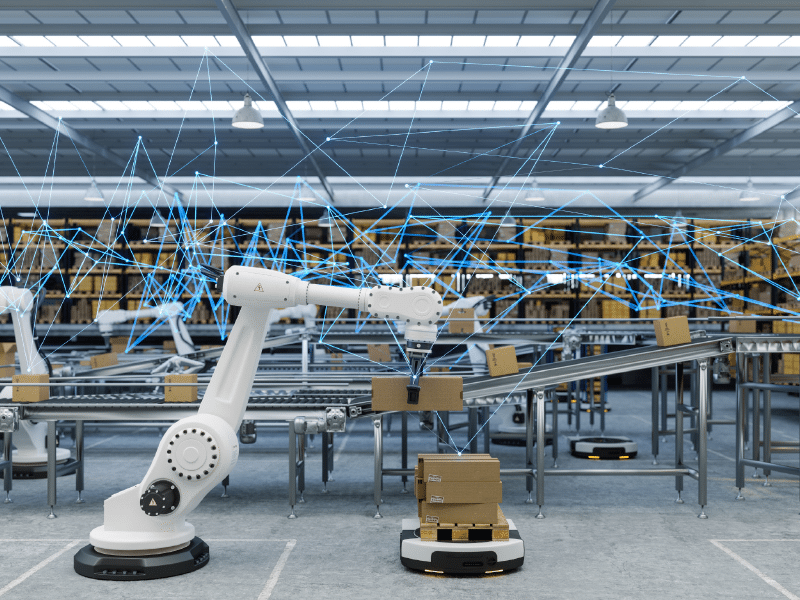
The simplest way to explain physical AI is as a combination of software (the mind) and hardware (the body). In this case, the hardware is a robot, and the software is a form of artificial intelligence (AI). When a robot and AI are combined, the result is what is known as Embodied AI, which enables intelligence to operate in a physical form and interact with the world.

Most AI systems focus on digital environments, meaning they can process and manipulate information, including text, images, videos, and large volumes of data. They help people by providing information, automating processes, and assisting with decision-making.
On the other hand, physical AI is more of a combination of robotics and artificial intelligence; it can also be developed and tested in digital environments known as simulations. These simulations allow robots to be trained and evaluated safely and efficiently before deployment in the real world.
Why now?
With the emergence of foundation models, the ability to perform physical tasks became significantly more flexible, similar to how large language models (LLMs) such as ChatGPT and Gemini expanded the capabilities of language-based AI.
Within a few years, this adaptable intelligence had begun making AI physical in practical ways. Today, vision-language models (VLMs), vision-language-action (VLA) models, and world models enable robots to perceive their surroundings, understand instructions, and act autonomously in real-world environments.
The emergence of adaptable intelligence has made physical AI a significant new frontier. Until recently, many robotics companies remained in research and prototyping phases for nearly two decades, as the technology required for widespread commercial deployment and large-scale adaptability simply did not exist.
AI has effectively become the missing layer that transforms robotics from rigid automation into scalable, intelligent systems.
The focus has also shifted from experimentation to utility. End users care less about the sophistication of underlying models and more about whether systems solve real-world problems efficiently and at a viable cost. While affordability continues to improve, the ability to deliver practical value has expanded significantly, accelerating adoption across industries.
As a result, robotics is expanding beyond traditional industrial applications into areas such as agriculture, healthcare, cooking automation, hospitality, logistics, and delivery.
| Software AI vs physical AI | ||
| Aspect | AI | Physical AI (Robotics/Embodied AI) |
| Nature of system | Purely digital, runs on apps, cloud, or devices | Physical systems operating in real-world environments |
| Scaling method | Fast digital deployment (internet-based distribution) | Slower due to manufacturing, installation, and maintenance |
| Main scaling drivers | Compute power, algorithms, data availability | Cost of hardware + adoption in real environments |
| User adoption factor | Convenience, performance, features | Trust, safety, and comfort with physical presence |
| Environment of use | Screens, servers, mobile devices | Homes, hospitals, workplaces, shared physical spaces |
| Data collection | Mostly digital behaviour (clicks, searches, usage patterns) | Continuous real-world sensing (cameras, audio, sensors) |
| Privacy concerns | Data tracking within apps and platforms | Much higher due to constant monitoring in private spaces |
| Security risks | Data breaches, account misuse | Physical + digital risks (hacking, surveillance, misuse of sensors) |
| Data ownership clarity | Often defined via terms of service | Still evolving; unclear standards for robots in homes |
| Adoption speed | Rapid global adoption | Slower due to regulation, trust, and safety concerns |
| Key barrier | Competition and compute costs | Safety, privacy, and ethical governance in real environments |
The new software layer transforming robotics
Modern robotics is no longer just about mechanical design and control systems. A new software layer—often referred to as VLA and, more broadly, VLM-based systems—is increasingly being used as the intelligence layer within robots, forming a key component of what is now known as Physical AI.
A robot is essentially a combination of hardware and software. From the hardware perspective, this includes structures, motors, wiring, sensors, and electronic systems. Traditionally, robotic software relied on predefined logic and machine learning models. As a result, robots typically performed well only on tasks for which they had been specifically trained and often struggled to adapt to unfamiliar situations in the real world.
This is where VLA models come into play. These models aim to help robots understand the world more like humans by combining visual perception, language understanding, and action.
Rather than relying solely on explicit programming, robots can learn from a wide range of sources, particularly videos of people performing tasks in real-world environments. This helps them develop a broader understanding of their surroundings and improve their ability to adapt to diverse situations. VLA and other world models are being developed to enable robots to interpret their environments, determine appropriate actions, and learn from large and diverse datasets.
Global participants developing and deploying such systems include Boston Dynamics, which is known for advanced mobile robots; Tesla, which is developing humanoid robots; Agility Robotics, which specialises in humanoid robots for warehouse applications; and Unitree Robotics, which is developing agile quadruped and humanoid robotic systems. The majority of systems focused on VLA and world models remain in the research phase or early stages of deployment, with an emphasis on improving robotic autonomy and data-driven learning.
Similar concepts are also being explored by Indian robotics companies. For example, Addverb Technologies is working on humanoid systems and warehouse automation, while iHub Robotics and other startups are developing technologies that enable robots to learn autonomously. These companies are beginning to utilise VLA-like AI within their technology stacks.
Physical AI aims to create robots that can perceive dynamic environments, make informed decisions independently, and adapt their actions in real time.
A longer-term goal is the development of general-purpose robots capable of performing multiple roles across different environments with minimal instruction.
The hidden chaos behind physical AI
One of the biggest challenges is data collection and transformation. In most cases, data is well-defined and easy to collect. Robotics and physical AI, however, require large amounts of unstructured data. This includes videos of people, data from robot-mounted sensors, and information about the surrounding environment. The biggest difficulty is not collecting the data; it is transforming it into a format from which robots can learn skills and knowledge and apply them across multiple tasks.
Companies working in this area collaborate with industries to gather operational data, particularly from manufacturing and domestic environments. This raises significant privacy, security, and video-surveillance concerns. Companies may also be reluctant to share internal recordings that could ultimately be used to train commercial AI systems.
Another significant challenge is the lack of scalable, general-purpose models that can operate across different robot types and task categories. Physical environments require a high degree of situational awareness and contextual understanding to solve complex decision-making problems.
The cost and infrastructure requirements associated with physical AI present another major obstacle. Because real-world data must be collected, simulation environments developed, and expensive custom hardware deployed for testing and validation. Training and deploying physical AI systems is significantly more expensive than developing traditional software-based AI systems. While the gap between simulated and real-world performance continues to narrow, companies must still invest heavily in development, deployment, and physical experimentation.
The challenge of integrating VLMs and VLA models with robotic control systems also remains substantial. Vision-language models are highly effective at understanding text and visual information, but translating that understanding into meaningful physical actions remains an early-stage capability.
| The physical AI stack |
| 1. Perception layer (sensing the physical world). This is where physical AI first interacts with the real world using sensors like cameras, IMUs, and force sensors. These devices capture visual data, motion, and environmental signals. For example, wearable cameras on a worker’s head or hands record how tasks are performed in real time. 2. Data collection and representation layer. Raw sensor data is cleaned and structured into usable formats. Videos are broken into action sequences, and motion data is converted into trajectories or key events. 3. Learning layer (model training/imitation learning). AI models learn from the prepared data using methods like imitation learning or reinforcement learning. 3. Decision-making layer (policy generation). This layer decides what the system should do next. It converts learned knowledge into actionable policies that map situations to actions. 4. Control layer (robot/device control). Here, high-level decisions are translated into low-level commands like motor speeds, joint angles, or force adjustments. 5. Actuation layer (physical execution). This is the final output stage where actions happen in the real world. Robots or machines perform tasks like moving objects, assembling parts, or interacting with environments. |
Robotics startups: The reality behind the hype
One of the first and most fundamental challenges is market validation. The most valuable technologies are often those that solve problems users genuinely care about, regardless of whether those users understand the underlying technology. Users ultimately care about outcomes: whether a solution delivers results that are better, faster, or more cost-effective than existing alternatives. This creates strong demand for technologies that generate measurable near-term value rather than technical sophistication alone.
Another major constraint is patient capital. Unlike software or purely digital AI companies, robotics ventures are capital-intensive and slow to iterate. Reaching a commercial product requires multiple design cycles, hardware revisions, physical testing, and field validation. In more mature innovation ecosystems, investors are often willing to commit significant capital over long time horizons before expecting returns. In India, while funding is available, patient capital for deep-tech hardware ventures remains comparatively limited.
Supply-chain complexity presents another challenge for deep-tech industries. Many critical robotics components are still not manufactured domestically and remain heavily dependent on overseas suppliers, particularly within China’s established manufacturing ecosystem.
These supply-chain gaps also create opportunities for entrepreneurship, particularly in hardware manufacturing, component production, and specialised industrial services. At the entrepreneurial level, most robotics-focused deep-tech ventures require multidisciplinary teams. While building teams for conventional software ventures can be relatively straightforward, robotics companies often require expertise spanning multiple domains.
Government agencies and other stakeholders have undertaken several promising initiatives to support technological entrepreneurship. Grants, incubators, and research programmes have been particularly helpful during the prototype-development stage. However, these programmes often provide limited support for commercialisation, leaving founders responsible for securing additional funding to scale production and market adoption.
India is still developing integrated manufacturing and prototyping ecosystems comparable to China’s industrial clusters. Research parks and innovation hubs, particularly in Bengaluru, aim to bring suppliers, startups, and research institutions closer together to accelerate development.
The robotics and AI sector will continue advancing through both technological breakthroughs and expanding real-world applications. Wider adoption is expected over the next two to five years as systems demonstrate greater reliability, safety, and practical value.
Supriya Rathi is a Physical AI commentator and host of SRX Robotics, connecting founders, researchers, and markets while tracking emerging innovations in robotics and deep-tech.
Co-author Nidhi Agarwal is Senior Technology Journalist at EFY with a deep interest in embedded systems, development boards, and IoT cloud solutions.


