




A new programmable timing solution combines multiple clock sources into a single device, simplifying high-speed system design for AI, networking and data centre applications.
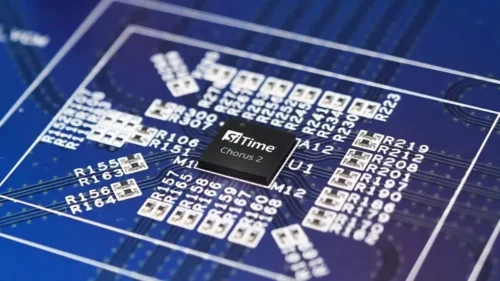
SiTime has introduced its latest programmable clock generator for AI, data centre and networking applications, enabling designers to replace up to 12 discrete oscillators or clock sources with a single device. Available in eight- and 12-output variants, the solution supports up to 20 programmable output configurations and is designed to simplify timing architectures in high-performance computing systems.
The clock generator addresses the growing complexity of modern server, networking and PCIe-based platforms, where multiple PCIe and SerDes clocks are required to support switches, retimers and other high-speed components. By consolidating these timing functions into one device, it reduces component count, saves board space and simplifies system design while maintaining precise clock distribution.
Designed for next-generation computing platforms, the device complies with the PCI Express (PCIe) Gen7 specification and delivers improved SerDes jitter performance of less than 110 femtoseconds at 156.25MHz. It also incorporates an ultra-low-noise output multiplexer, allowing designers to generate a wide range of clock frequencies through flexible fractional-divider technology.
Additional features include four independent spread-spectrum clocks, enhanced output-to-output skew control and the ability to disable unused outputs to reduce power consumption and minimise system noise. These capabilities make the clock generator suitable for applications requiring reliable synchronisation across multiple high-speed devices.
The solution is also pin-to-pin compatible with existing market offerings, enabling straightforward replacement in current hardware designs without extensive redesign. It is available in compact 5mm × 5mm 40-pin QFN packages with eight- and 12-output options, giving developers greater flexibility when designing next-generation AI, networking and enterprise computing systems.
Click here for original announcement


