

The reference design integrates an OCPP 1.6 software stack with MPLAB Harmony v3 to simplify the development of connected AC EV charging stations, enabling secure communication, standards compliance and faster product development.
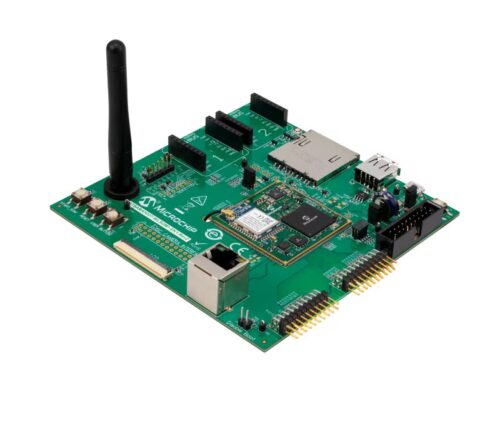
Microchip Technology has introduced the OCPP 1.6 Stack Library for MPLAB Harmony v3, a reference design for developing connected AC electric vehicle (EV) charging stations. The solution combines a standards-compliant OCPP 1.6 software stack with MPLAB Harmony v3 and the ATSAMA5D27-WLSOM1 evaluation platform to simplify charger development, support secure communication with central management systems and reduce time to market.
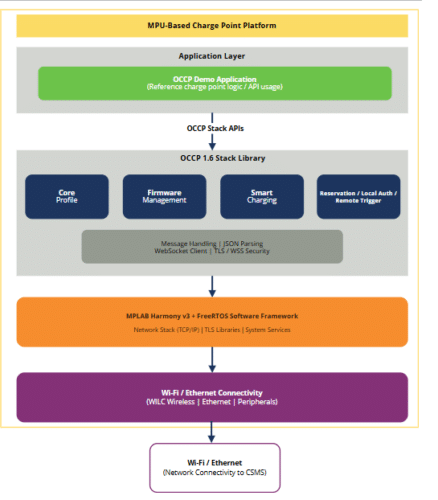
The reference design provides a reusable OCPP 1.6 protocol library supporting key features including firmware management, authorisation, transaction handling, reservation, smart charging, metering, remote start/stop, diagnostics and configuration. A ready-to-run demonstration application is also included, allowing developers to quickly evaluate the stack and integrate it into production charger firmware.

Supporting OCPP over secure WebSocket (TLS/WSS), the design enables encrypted communication between EV charging stations and central management systems. Its modular architecture allows developers to customise the implementation, add application-specific features and migrate to future OCPP versions with minimal development effort.
The reference design has been validated on the ATSAMA5D27-WLSOM1 Evaluation Kit, which combines a SAMA5D27 wireless System-on-Module with Wi-Fi, Ethernet and embedded security features. By providing validated hardware, comprehensive documentation and application programming interfaces (APIs), the platform offers a proven starting point for developing commercial AC EV charging solutions.
Microchip says the reference design helps manufacturers accelerate the development of standards-compliant, network-connected EV chargers while reducing software integration complexity and improving interoperability with existing charging infrastructure.
Click here to read more about the reference design.