




The AI-based control system combines model predictive control and diffusion models to enable quadruped robots to adapt to new terrain and tasks without retraining.
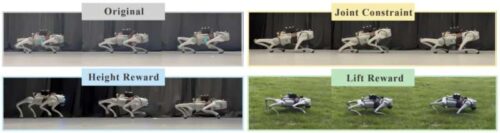
Scientists from the Harvard John A. Paulson School of Engineering and Applied Sciences (SEAS) created an AI-powered control system that allows quadruped robots to adapt to new terrains, functions, and goals of locomotion without going through additional training. The control technology, called Diffusion-MPC, combines model predictive control and a generative diffusion model so that robots can adjust their behavior in real-time while enforcing physical and safety constraints.
This solution combines the strengths of the two leading methods of control for quadruped robots. Standard model predictive control depends on the accuracy of the dynamics model, which usually requires simplification assumptions, and model-free reinforcement learning provides reliable but inflexible behavior, which is hard to change after training. Diffusion-MPC integrates the benefits of these methods through an approximate model of how the robot and its environment evolve over time.
The ability of the system to make adjustments based on the use of rewards and constraints in real-time enables it to adapt to varying speeds, directions, gaits, and terrains without having to undergo further training. The researchers demonstrated the approach on real quadruped robots.
“What is especially exciting to me are the results demonstrating flexible adaptation on real quadruped robots, including changing terrain, slopes, balance recovery and different control objectives,” said Yilun Du, assistant professor of computer science at the Harvard John A. Paulson School of Engineering and Applied Sciences (SEAS). “More broadly, I see this as a step toward general-purpose locomotion controllers—systems that can be reprogrammed or adjusted in the field as conditions change, rather than being limited to the exact scenarios they were trained for.”
