





Researchers have developed an AI-powered forecasting system that predicts short-term solar power fluctuations, helping grid operators balance electricity supply more efficiently and reliably.
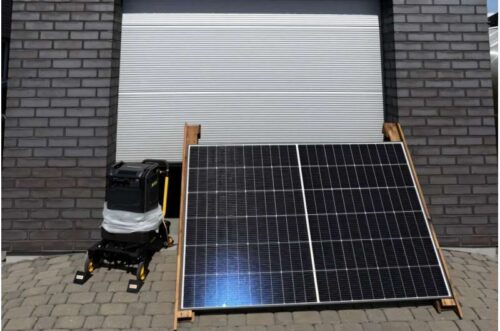
Researchers at Kaunas University of Technology (KTU) have developed ShadowSense, an artificial intelligence system that predicts short-term changes in solar power generation by analysing cloud movement. The technology could help electricity grid operators better manage renewable energy by providing earlier and more accurate forecasts of fluctuations in solar output.

Unlike conventional image-based AI models that rely on manually labelled datasets, ShadowSense learns directly from the relationship between images of the sky and real-time changes in solar panel power output. By linking cloud movement with electricity generation, the system continuously improves its ability to predict when solar output is likely to rise or fall.
The researchers said the technology was designed to provide forecasts several seconds or minutes in advance, giving operators valuable time to balance electricity generation, storage and consumption. This could reduce the need for reserve power while improving the efficiency of renewable energy systems.
To evaluate the system, the team installed it on the roof of a residential building in Kaunas, Lithuania, rather than in a controlled laboratory. Over a 92-day period, the setup collected more than 122,000 synchronised observations, combining wide-angle sky images with simultaneous solar panel power measurements.
According to the study, ShadowSense reduced average forecasting errors by almost one-third compared with conventional methods. It also detected more than 92 per cent of sudden power fluctuations caused by passing cloud shadows. Each forecast required only around 66 milliseconds to process while consuming approximately 0.52 joules of energy, allowing the system to operate in real time on low-power computing hardware.
The researchers believe the technology could benefit decentralised solar installations, remote locations and energy systems with limited computing resources or internet connectivity. As renewable energy becomes a larger part of national electricity grids, accurate real-time forecasting tools such as ShadowSense could improve grid stability and help solar power systems respond more intelligently to changing weather conditions.


