






A heat pump uses waste heat for cooling, helping factories and data centres use less electricity, save energy, and reduce noise.
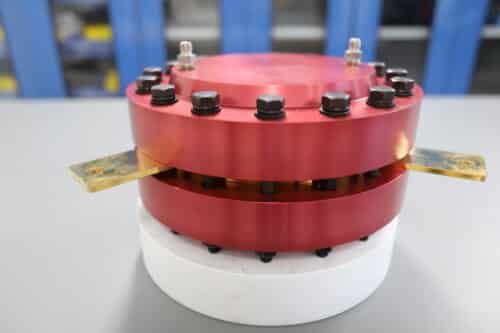
Researchers in South Korea have developed a next-generation heat pump that uses low-temperature waste heat from factories and data centres to provide cooling, reducing the need for electricity-driven air-conditioning systems.
The system was developed by the Korea Institute of Machinery and Materials (KIMM) in collaboration with Chung-Ang University under the Alchemist Project funded by the Korea Institute of Energy Technology Evaluation and Planning (KETEP). KIMM designed the chemical adsorption heat pump, while Chung-Ang University developed a noise- and vibration-free electrochemical compressor. Samjung Tech built a 10kW prototype of the system.
Unlike conventional adsorption cooling systems that require waste heat above 70°C, the new heat pump operates using waste heat as low as 40°C. This allows industries and data centres to reuse heat that would otherwise be wasted, improving overall energy efficiency.
The researchers also redesigned the adsorption bed, the key component of the heat pump. The new design achieved a specific cooling power (SCP) of 346.5W/kg, which the team says is more than twice the performance of comparable international technologies.
The system replaces conventional mechanical compressors with an electrochemical compressor that has no moving parts. As a result, it consumes less energy while producing almost no noise or vibration, making it suitable for applications in hospitals, schools, residential buildings, factories, commercial facilities, and data centres.
Another feature of the system is its use of ammonia as a natural refrigerant. This helps meet international refrigerant regulations while offering a more environmentally friendly cooling and heating solution.
According to the researchers, the key achievement of the project was demonstrating cooling using waste heat at only 40°C. The team is currently testing the 10kW prototype and plans to continue field demonstrations to move the technology closer to commercial deployment.


