Could an ultrathin magnetic material change how future electronics handle data? A rare magnetic state could enable faster, lower-energy devices.
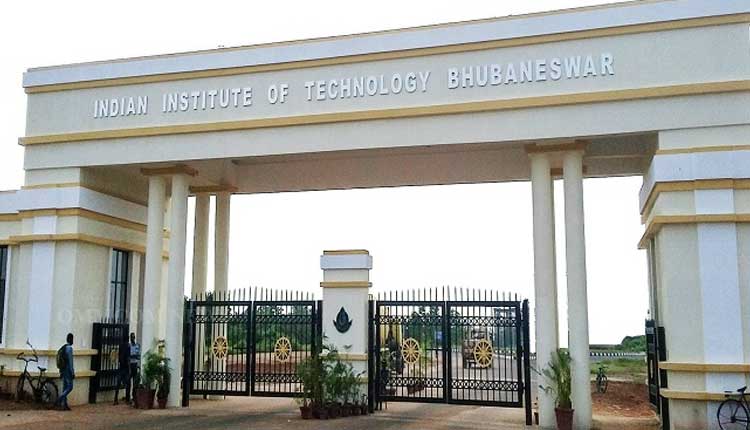
Researchers at IIT Bhubaneswar and Virginia Commonwealth University have theoretically predicted a two-dimensional material that exhibits a rare form of magnetism known as i-wave altermagnetism. The predicted material is a monolayer of iron trichloride (FeCl₃), approximately three atoms thick, that could provide a platform for future spin-based electronics.
Altermagnetic materials combine characteristics associated with ferromagnetic and antiferromagnetic systems. They can produce spin-polarised currents while generating little stray magnetic field, potentially allowing magnetic components to be positioned more closely without significant magnetic interference.
This combination could be useful for spintronic devices, where information is encoded using electron spin as well as electrical charge. The approach could potentially reduce energy consumption while supporting faster information processing in applications such as high-density memory, spin-based transistors, terahertz systems, and quantum technologies.
The researchers predict that the FeCl₃ monolayer can support an i-wave symmetry altermagnetic state, providing a mechanism for controlling electron spins in an ultrathin material. Its two-dimensional structure could also be relevant to highly scaled electronic architectures where conventional magnetic materials can present challenges related to size and stray fields.
The work was led by Dr Manish Kumar Mohanta of the Department of Physics at IIT Bhubaneswar and published in Nano Letters. The theoretical prediction expands the range of materials being investigated for altermagnetism and could provide a basis for experimental studies of spin-dependent electronic behaviour.
“With the growing demand for high-speed and energy-efficient computing, this discovery offers a new direction for designing future electronic devices with improved speed, efficiency and reliability,” says Dr Manish Kumar Mohanta, Department of Physics, IIT Bhubaneswar.