Can AI solve the heat problem it helped create? A swarm of agents is searching atomic structures for materials that could keep chips cooler.
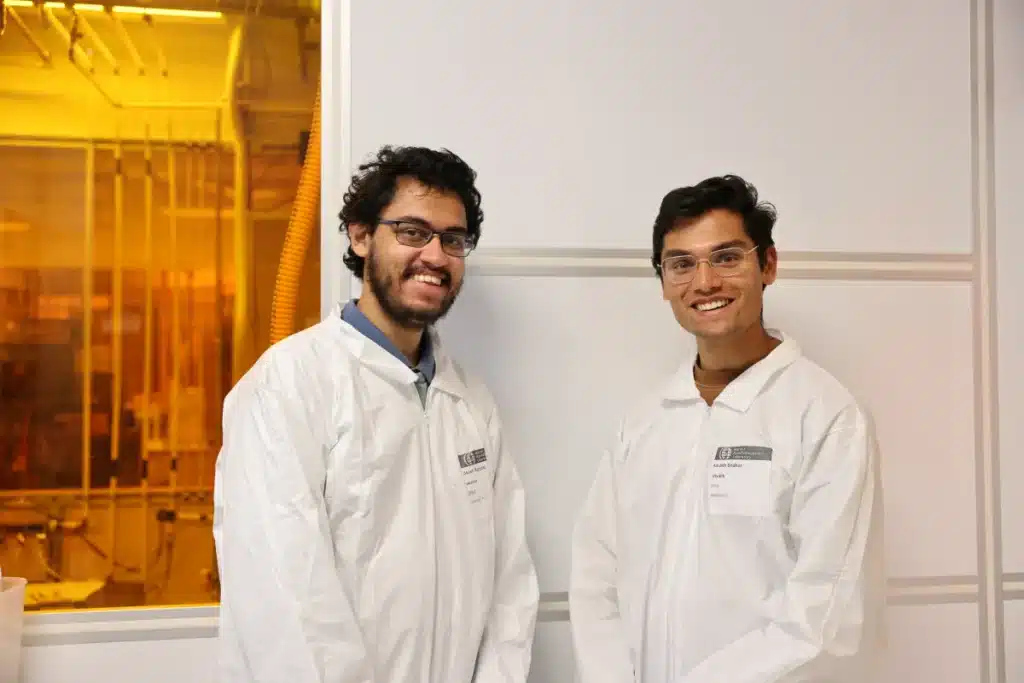
Discovered Materials is using artificial intelligence (AI) agents and physics-based simulations to search for materials that could help reduce heat generation and improve thermal management in semiconductor devices. The approach targets one of the growing challenges in AI hardware, where increasing compute density is driving higher power consumption and cooling requirements.
The company’s software pipeline is designed to accelerate the early stages of materials discovery by generating large numbers of candidate materials and evaluating their properties computationally. The approach could help researchers explore a much larger design space than conventional materials research, where candidate generation and evaluation can take considerably longer.
The system uses AI models to generate material candidates and physics models developed by the company to simulate and assess whether those candidates have useful characteristics. According to the company, the agents can explore thousands of potential candidates each day, compared with the much smaller number a researcher might evaluate manually.
However, a candidate material must satisfy several requirements simultaneously to be useful for semiconductor manufacturing. A material that offers better thermal performance may still have unsuitable electrical properties or prove difficult to manufacture at chip scale. The company is therefore also working on experimental validation of computationally identified candidates.
Discovered Materials has released examples of hundreds of candidate materials and introduced a benchmark intended to evaluate how AI models perform at materials discovery. The company says some identified materials have properties comparable to materials already used in semiconductor manufacturing, although specific candidates have not been disclosed.
The approach is particularly focused on materials for semiconductor thermal challenges, with potential applications in graphics processing units (GPUs) and other high-performance computing hardware. The company plans to pursue intellectual property around useful materials and their integration into chip manufacturing.
“I don’t believe finding more candidates is the hold-up for AI materials science; instead, filtering them correctly and synthesising them is the bottleneck,” says Hemant Mohapatra, partner at Lightspeed India Partners.