

Researchers are developing semiconductor processes that avoid rare earth metals and forever chemicals.
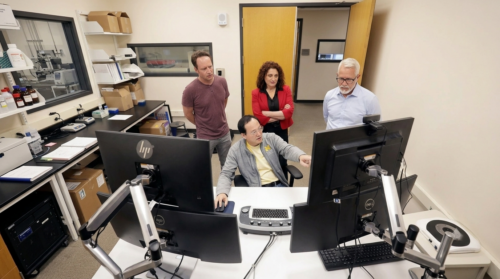
Researchers at the University of Michigan, working with semiconductor research organisation Imec, are developing alternatives to rare earth metals and per- and polyfluoroalkyl substances (PFAS) used in semiconductor manufacturing. The work, called Common Earth, aims to reduce dependence on materials that can expose chipmakers to supply-chain disruptions and geopolitical restrictions.
The project focuses on two areas of semiconductor manufacturing: hafnium and rare earth elements. Hafnium is used in the gate dielectric, the insulating layer between a transistor’s control electrode and silicon channel, and has been used in advanced logic chips since the mid-2000s. Rare earth elements are more commonly used in protective coatings for equipment involved in plasma-based fabrication, helping protect the machinery rather than forming part of the finished chip. Semiconductor manufacturing also uses PFAS, or “forever chemicals”, which can persist in the environment and face increasing regulatory restrictions.
The supply problem differs between these materials. Hafnium is not particularly scarce, but it is mainly obtained as a byproduct of zirconium mining, with zirconium demand driven largely by the nuclear power industry. Increasing hafnium production for semiconductor manufacturing would therefore depend on expanding a separate mining sector. Rare earth elements face a different constraint: they are not inherently rare, but refining costs have made China’s deposits among the most economical to process, concentrating much of the global supply there. The vulnerability of byproduct-dependent materials has already appeared in semiconductor manufacturing; when steel mills in Ukraine halted production, neon, a steelmaking byproduct used in chip fabrication, reportedly saw its price increase roughly tenfold.
Rather than looking for one-for-one chemical replacements, which the researchers say can compromise performance, the Common Earth project is pursuing changes at both the material and chip-design levels. Heron’s group is testing nitrogen-based precursors as alternatives to fluorine-containing chemistries and investigating salt-based materials that could replace hafnium in gate dielectrics. Bertacco’s group is taking an architectural approach through chiplet-based designs, where smaller reusable chip sections can be combined for different product requirements. This could reduce dependence on a single highly optimised material or manufacturing process. Imec is helping test these approaches on semiconductor fabrication lines and connect the university research with manufacturers that could eventually adopt the technologies.

Hafnium is already embedded in advanced logic manufacturing, with high-k hafnium-based gate dielectrics becoming standard around the 45-nanometre process era. Modern smartphone, laptop and server processors therefore already depend on hafnium-based materials in their transistor structures. The Common Earth project is targeting materials and processes that are already fundamental to today’s advanced semiconductor industry rather than a future technology dependency.
Global rare earth processing remains heavily concentrated in China, while hafnium supply depends largely on zirconium production as a byproduct rather than dedicated mining. One dissenting view came from engineer David Lindbergh in a reader response to the original discussion. He argued that the quantities of rare earths and other critical materials used in semiconductor manufacturing are small enough that even a 50-fold increase in their cost would have little effect on the final price of a chip. This represents a different assessment of the risk, framing it primarily as geopolitical supply dependence rather than a major direct effect on chip prices.
India’s semiconductor build-out under the India Semiconductor Mission includes major projects such as Micron’s assembly and test facility in Sanand and semiconductor manufacturing projects from Tata Electronics and other companies. India is also working to strengthen domestic supplies of critical minerals and semiconductor manufacturing inputs. The country has significant rare-earth-bearing mineral resources, with state-owned IREL operating extraction and refining facilities in Odisha and Kerala. IREL’s Odisha facility has an installed capacity of about 11,000 tonnes per year of mixed rare-earth chloride, while its Aluva facility has a refining capacity of about 4,000 tonnes per year. The government is also targeting greater domestic production and processing of critical minerals to reduce import dependence. If research such as Common Earth succeeds in enabling semiconductor manufacturing with more widely available materials, it could eventually help address the type of supply-chain dependency India is trying to reduce, although the researchers have not established a timeline for production-fab adoption.
The researchers see regulation around PFAS emissions as a more immediate driver for changing semiconductor manufacturing processes than material costs. Heron argues that if regulations restrict PFAS waste, manufacturers may have to adopt cleaner alternatives regardless of their short-term economic cost. The Common Earth project has not announced a commercialisation timeline.
For more information, click here.