

An agritech startup has built AI- and IoT-powered solutions that help shrimp farmers monitor ponds, detect diseases early, automate feeding, and reduce operational risks. In an interview, Pavan Kosaraju from Aqua Exchange spoke to Nidhi Agarwal from EFY about building affordable technology for precision aquaculture.
Q. What does Aqua Exchange do?
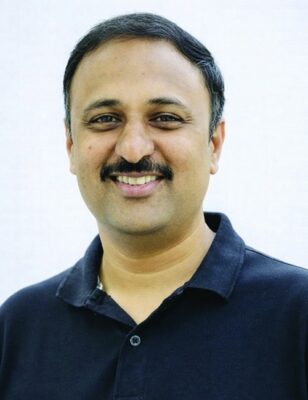
A. Aqua Exchange provides a full-stack technology platform for the shrimp aquaculture ecosystem, serving shrimp farmers as well as hatcheries, processors, exporters, and businesses involved in harvesting and post-harvesting. Its offerings focus on three areas. The first is farm management, which helps improve day-to-day operations, increase efficiency, reduce mortality, improve day-to-day operations, and provide predictive farm management tools. The second is finance and risk management, where its proprietary platform enables banks to provide loans by supporting loan origination, processing, asset tracking, and recovery. It also connects insurance providers with farmers to offer comprehensive coverage for a wide range of loss events in shrimp farming.
The third area is market connectivity, helping farmers and exporters meet the requirements of global buyers through traceability, quality assurance, certifications, and sustainability compliance. Since over 90% of India’s farmed shrimp is exported, these capabilities are essential for accessing international markets. The company has automated around 85,000 acres of shrimp farms, covering roughly 30% of India’s shrimp farming area, and serves more than 10,000 farmers. It operates across Andhra Pradesh, Odisha, Tamil Nadu, Karnataka, and Gujarat, and has expanded to four other countries.
Q. What are your main products?
A. We have a portfolio of around 17 IoT products, all designed, developed and manufactured at our facility near Vijayawada, and we own the intellectual property for each of them. One of our key solutions is an aerator monitoring system. Aerators maintain dissolved oxygen levels in shrimp ponds, and even a two- to three-hour disruption can result in the loss of an entire pond. Our IoT system continuously monitors aerators, alerts farmers through phone calls if one stops working for more than 10 minutes, and allows them to track operations in real time through a mobile app. Today, we monitor more than 250,000 aerators across India. We also offer an energy management solution because electricity is the second-largest cost for shrimp farmers. By monitoring electricity usage and improving the power factor from the typical 0.80 to around 0.98, our system helps farmers reduce their energy costs.
Another major offering is our IoT-enabled robotic feeder, a solar-powered system that automates feeding throughout the day and night. To reduce feed wastage, we have developed an AI-based feeding solution that uses underwater microphones to capture shrimp feeding sounds. Our AI analyses these acoustic signals to estimate hunger levels and adjusts feeding accordingly, improving feed efficiency by around 10%. We also offer AI-based health monitoring solutions that analyse microscopic images of shrimp organs, such as the hepatopancreas and gut, along with water samples. Using AI models developed in-house, the system can detect stress and predict disease risks three to four days before visible symptoms appear. While farmers typically identify problems only after shrimp start dying, our early warning system helps reduce mortality losses by around 40% to 50%.
Q. What makes your company stand out in this competitive market?
A. We believe we are the only company offering this complete range of solutions for shrimp farming. While technology is important, our biggest differentiator is how we make it practical for farmers. All four co-founders are engineers, but we’ve always focused on making our products affordable, easy to use, and suitable for farms of different sizes. A technology that is too expensive or too complex will never see large-scale adoption.
Another key differentiator is our Hardware-as-a-Service (HaaS) lease model. Instead of requiring farmers to make a large upfront investment with a two- to three-year payback period, we offer products on a low monthly lease. For example, Powermon APFC costs around ₹200 per acre per month but helps farmers save about ₹400-500 per acre in electricity costs. Similarly, the AI feeder costs about ₹2500 per pound per month. For four ponds, the monthly technology cost is around ₹10,000, compared with roughly ₹20,000 to employ a worker after salary and related expenses. As a result, farmers see immediate savings rather than additional costs. We also cultivate shrimp on around 100 acres ourselves, giving us firsthand experience of farmers’ challenges and helping us design solutions that meet real operational needs.
Q. What were the biggest operational challenges shrimp farmers faced before adopting your solutions, and how have you addressed them?
A. Shrimp farming has traditionally been considered a high-risk business because it requires constant monitoring and quick responses to changing conditions. Farmers often had to stay near their ponds to ensure equipment such as aerators kept running, as even a short interruption could result in significant losses. Water quality, salinity, mineral levels, weather changes, feeding, and shrimp health also needed continuous monitoring, which was difficult to do manually.
We studied these risks and developed technology to address each one. Our solutions include aerator monitoring, energy management, water quality monitoring, automated feeding, feed monitoring, health monitoring, and biological analysis. By automating these critical processes, we have reduced operational risks and improved farm performance. Industry reports earlier estimated shrimp farming success rates at around 55%, while data from farms using our platform shows success rates have increased to about 83%, demonstrating the impact of reducing these risk factors.
Q. Can you share an example where your real-time alerts helped farmers avoid significant losses?
A. Our platform has made more than 51 million automated alert calls so far. Out of these, around 3500 to 4000 farmers have told us that the alert helped save their crop. Shrimp farming requires constant monitoring, but even if a worker misses an aerator failure for a few hours, an entire pond can be lost. Around 10 days ago, I personally received a call from a farmer who said our alert helped him avoid a loss of nearly ₹3.4 million. Another strong validation is that we have never spent money on marketing or advertising. Despite that, we have continued to grow our market share, mainly through word-of-mouth because farmers see the value of the product firsthand.
Q. How affordable is your solution for small farmers?
A. Our flagship solution costs about ₹200 per acre per month. To put that into perspective, it is less than what many farmers might spend on tea or refreshments while working on the farm. More importantly, the solution helps farmers achieve a net monthly saving of around ₹400–₹500 per acre. Since they spend about ₹200 but save significantly more, it does not create any additional financial burden on the farm.
Q. How scalable is your solution for farms of different sizes?
A. The platform is designed to be scalable because our pricing is based on pond-level unit economics, rather than the size of the entire farm. This means the solution is profitable whether a farmer has one pond or hundreds. Based on our analysis, farmers with more than 1.5 acres typically see a return on investment within one to two months, while even one-acre or half-acre farms can achieve ROI in three to four months. The same model works for large enterprise farms, including those in Ecuador spanning over 1000 hectares. By making advanced technologies such as AI-based disease monitoring affordable, we also enable small farmers to achieve operational efficiency comparable to much larger commercial farms.
Q. What were the biggest engineering design challenges while developing your IoT products, and how did you overcome them?
A. The biggest challenge was not building the technology itself, but making it affordable for farmers. Many technologies used in sectors like automotive or aerospace can solve the problem, but they make the final product too expensive for agriculture. We therefore focused on ensuring every product delivered a clear return on investment (ROI) for the farmer, ideally within six months. In fact, we dropped a few products even though they worked well because we could not justify their economic value. For us, affordability and practicality are as important as technical performance.
Q. What engineering challenges did you face while designing hardware for shrimp farms, and how did you overcome them?
A. Designing hardware for shrimp farms is very different from building devices for typical industrial environments. The equipment operates in nearly 100% humidity, temperatures ranging from about 6–7°C to over 48°C, and is exposed to regular water splashes, dust from feed, and constant vibrations. In addition, the devices are handled by a changing workforce, so they must be robust enough to withstand rough use.
Developing reliable hardware was an iterative process that took us two to three years. We designed the devices with IP65-rated protection, but even then, vibration-related failures remained a challenge. To improve reliability, we now carry out detailed acoustic and vibration analysis before finalising designs. We also test the devices under high-humidity conditions and perform accelerated life-cycle testing, where we simulate about three years of field use within a month. Some conventional IoT design approaches were not suitable for these operating conditions, so we had to develop our own engineering solutions, many of which form part of our core intellectual property.
Q. How do you manufacture your products, and what parts of the process are handled in-house versus outsourced?
A. We handle the entire hardware design in-house. The electronic components and PCBs are sourced through vendors, and the PCB manufacturing is carried out by external partners. Once the PCBs are ready, they are shipped to our manufacturing facility near Vijayawada, where the rest of the manufacturing takes place. We carry out device assembly, electronics assembly, plastic manufacturing, and the complete structural manufacturing in-house. In short, only the PCB-level manufacturing is outsourced, while all remaining manufacturing and assembly activities are done at our own facility.
Q. What processors and communication technologies do you use in your IoT devices, and why?
A. We mainly use two hardware platforms. Most of our IoT devices are based on the ESP32 microcontroller because they do not require heavy edge processing and offer a cost-effective solution. For applications that need higher computing power, such as our AI-based shrimp feeding system that analyses underwater sound signals, we use Raspberry Pi-based platforms. All our devices communicate over Wi-Fi to avoid the need for specialised infrastructure such as LoRa gateways. For sending data from the farm to the cloud, we use machine-to-machine (M2M) SIM cards, which provide reliable connectivity even in low-bandwidth conditions.
Q.What sensors are deployed at the farm, what parameters do they measure, and how frequently is the data collected?
A. We monitor several aspects of farm operations using different sensors. For power monitoring, we measure current, voltage, power factor, kilowatt-hours (kWh), and other electrical parameters, which also act as indicators of device activity on the farm. This data is transmitted to our servers every five minutes. At the edge, however, the APFC device processes the electrical data every two seconds using built-in algorithms to continuously adjust its operating profile. For feeding, we use underwater acoustic sensors that capture sound from the pond every three minutes. The data is processed locally on a Raspberry Pi-based edge device before being sent to the cloud at the same three-minute interval.
We also deploy water quality sensors that measure dissolved oxygen, temperature, and salinity every five minutes after being placed in the pond, with the readings transmitted to the servers at the same interval. In addition, we collect weekly data to analyse the pond’s plankton profile, including the type and density of plankton present, and we also record weekly shrimp health parameters. Together, these datasets provide a comprehensive view of farm operations, water conditions, and animal health.
Q. Is the data processing done at the edge, or is everything sent to the cloud for processing?
A. We use a hybrid approach that combines edge and cloud processing. Critical functions, such as protecting aerators from overvoltage, undervoltage, or mechanical faults, are handled directly at the edge. This ensures the system continues to operate even if internet connectivity is lost. We also process shrimp sound signals locally on the device so that immediate actions can be taken without delay. Cloud processing is used for advanced tasks such as data analytics and long-term insights, where real-time response is not essential.
Q. Many shrimp farms are located in areas with poor internet connectivity. How do you ensure your IoT solutions remain reliable in such conditions?
A. Connectivity is a challenge in remote farming areas, so we designed our system to work with very low data bandwidth using M2M SIM cards instead of data-heavy communication methods. Today, we operate more than 20,000 IoT devices across farms in India, and this approach has proven to be reliable. Even then, there are rare cases—about 0.3% to 0.4% of the time—when connectivity is lost. To address this, our platform immediately alerts the farmer whenever a device goes offline, allowing them to manually monitor or operate the equipment until the connection is restored. This ensures there is no confusion about the system’s status. Overall, our network maintains an uptime of around 99.6% to 99.7%.
Q. How do you optimise the power consumption for devices deployed in ponds for extended periods?
A. Our objective is not to reduce the amount of electricity consumed but to improve the power factor. Shrimp farm aerators are based on induction motors, which create a lag between voltage and current, lowering the power factor. This difference can be seen in industrial electricity bills through the gap between kilowatt-hours (kWh), which measures actual energy consumed, and kilovolt-ampere-hours (kVAh), which reflects apparent energy. A lower power factor results in efficiency losses, and utilities often impose penalties for inefficient power usage.
To improve this, we use capacitors in our automatic power factor correction (APFC) system and continuously match the capacitance to the electrical load. The challenge is that the load in a shrimp farm is highly dynamic because aerators are regularly switched on and off, unlike a fixed industrial load where a fixed capacitor bank is sufficient. Our system dynamically adjusts the capacitance in real time based on changes in the load, allowing us to maintain a high power factor, improve electrical efficiency, and minimise power factor-related penalties.
Q. How do you manage OTA firmware updates for devices deployed across different regions?
A. Since our devices are deployed across multiple states and countries using M2M data SIMs, OTA firmware updates are an essential part of our operations. One of the biggest priorities is keeping the firmware package lightweight, so updates can be delivered reliably even over limited network connections. We have also built a proprietary monitoring framework that tracks update failures, detects issues, and supports rollback and recovery mechanisms. This customised platform helps us monitor device health and ensure firmware updates are completed successfully across our entire installed base.
Q. How do you deal with sensor corrosion, fouling, and maintenance challenges in underwater aquaculture environments?
A. Biofouling and scaling are major challenges because shrimp ponds contain high levels of organic matter, with feed added every day, creating intense biological activity. We follow standard operating procedures (SOPs) for regular sensor cleaning and can also detect from the device data if those maintenance procedures have not been followed. It’s worth noting that only one of our devices operates underwater, while most of the hardware is installed above the water surface to reduce exposure.
Another key focus has been building extensive self-diagnostic capabilities into our devices. With around 20,000 devices deployed, sending technicians to every farm would be both operationally and financially inefficient. Our devices can not only detect when something is wrong but also identify the likely cause of the issue. Today, over 95% of device alerts include a self-diagnosis, enabling the reliability team to take targeted action. More than 60–70% of these issues can be resolved remotely, and our goal is to increase that figure to around 90%, further reducing the need for on-site intervention.
Q. How do you train your AI models using real farm data collected from different regions?
A. Our biggest advantage is access to large volumes of real-time, contextual farm data. For example, we have more than 500,000 images collected from shrimp farms. These are not just standalone images—they include detailed context such as the farm’s location, the specific pond, the age of the shrimp crop, and water quality conditions at the time the image was captured. This contextual data allows us to train AI models much faster and improve their accuracy. We have built similar datasets for applications such as feed monitoring and shrimp health monitoring. While others can also develop such AI models, collecting this volume of real-world, contextual data takes considerable time, making it a key differentiator for us.
Q. What level of accuracy has your platform achieved for shrimp counting and disease detection?
A. Our AI models currently achieve around 98% accuracy in disease prediction. For shrimp counting, the accuracy is about 99.6%. We continue to improve these models as we collect more field data from farms.
Q. What imaging techniques do you use for shrimp counting and health monitoring? What are the biggest technical challenges in analysing underwater images?
A. We do not use underwater imaging. Instead, shrimp are taken out of the pond and placed in a tray for analysis. For health monitoring, samples from the shrimp or their organs are examined using a standard laboratory microscope. To keep costs low, we developed adapters that allow regular smartphone cameras to capture microscope images, eliminating the need for expensive digital microscopes. A basic 10-megapixel smartphone is sufficient for our analysis. Once the images are captured, they are converted into digital format and processed by our software. Underwater imaging is not practical because visibility in shrimp ponds is limited to about 1–1.5 feet, while the ponds are typically 4–5 feet deep and shrimp remain in the darker areas. Since shrimp are cold-blooded animals, techniques such as infrared imaging are also ineffective.
Q. Can your full-stack framework be extended to other agriculture sectors such as dairy, poultry, or crop farming?
A. Yes, we strongly believe it can. Our approach is to look at an agricultural sector holistically rather than solving just one or two isolated problems. We address not only farming challenges but also ecosystem requirements such as financing, insurance, and end-customer needs. We call this a full-stack approach to agritech, and we believe it is applicable across other agricultural asset classes, including dairy, poultry, and crop farming. In fact, we plan to take our first steps into these segments in the near future.
Q. What inspired you to start the company, and what is the story behind its name?
A. All the co-founders are engineers from small towns and villages in coastal Andhra Pradesh, where shrimp farming has been part of the local economy for 35 to 40 years. After spending six to seven years working abroad, we wanted to return and build a technology company in our home state. Since shrimp farming is one of Andhra Pradesh’s strongest industries, we decided to focus on it. Before developing our products, we collectively spent nearly 10 years working on shrimp farms, and today our combined experience in the sector exceeds 20 years. Instead of relying on market studies, we built our understanding by listening to farmers. One such interaction led to our flagship product, Powermon. We initially tried to measure dissolved oxygen in ponds, but a farmer pointed out that the real issue was monitoring the aerators that generate oxygen. That feedback shifted our approach, and we have continued to develop new products by staying closely connected with the farming community.
The name Aqua Exchange reflects our vision of creating a platform that connects every stakeholder in the shrimp ecosystem, including farmers, hatcheries, exporters, banks, insurance companies, and retailers. Using data and technology, we help these groups work together more effectively. For example, we provide banks with structured data to assess farmers while ensuring loan products suit farmers’ needs. We follow the same approach with insurance companies and retailers by supporting requirements such as traceability and sustainability. Our goal is to serve as the central platform that enables collaboration across the aquaculture ecosystem.
Q. How old is the company, and how has it grown since it was founded?
A. We started the company in August 2020, so we are approaching our sixth anniversary. Today, we have more than 400 employees. Our headquarters and main operations are based in Vijayawada, while our field teams are spread across shrimp farming regions in India. We also have a subsidiary in Ecuador, giving us an international presence.
Q. Can you share the company’s financial performance in the last financial year?
A. We closed the financial year ending March 2026 with revenue of around ₹2.75 billion. We have also reached operational break-even, which is an important milestone for the company.
Q. Is Aqua Exchange a bootstrapped startup, or have you raised external funding?
A. We are a venture capital-backed company. Most recently, we raised a Series B funding round, and to date we have raised approximately $18 million in venture capital funding.
Q. What are the biggest challenges Aqua Exchange is currently addressing as it scales rapidly?
A. In the early stages of the company, our primary focus was creating technology solutions. Today, as we grow, our biggest priority is ensuring the reliability of those solutions. Much of our team’s effort is directed toward continuously monitoring and improving reliability so that our products consistently perform as expected.
However, reliability is not just about technology. It also includes processes, supply chain reliability, and operational excellence. We are currently focused on strengthening these areas, particularly supply chain stability, because we now work with customers and suppliers across different parts of the world. As the company scales, ensuring both technological reliability and non-technical operational reliability has become one of our biggest challenges and highest priorities.
Q. Are you looking for channel partners, distributors, financial partners, or academic collaborations?
A. We are definitely looking to build more partnerships with financial institutions and insurance companies. In terms of channel partnerships, we have a clear distinction between our operations in Andhra Pradesh and outside the state. While we manage operations directly in Andhra Pradesh, we are actively looking to work with channel partners in other regions to expand our reach.
We already collaborate with one or two universities on shrimp health management and health monitoring, where we benefit from academic expertise on the biological aspects of aquaculture. At the same time, we are open to partnering with more academic institutions because these challenges require rapid iteration, and we are happy to have multiple groups work on the same problem to identify the most effective solutions. We also see opportunities beyond aquaculture, including poultry and dairy, where we can contribute the technology while academia serves as the knowledge partner to jointly develop new solutions.
Q. What advice would you give engineers building IoT solutions for agriculture or aquaculture?
A. The first piece of advice is to listen closely to customers. In sectors like agriculture and aquaculture, customers often provide the best insights into what problems need to be solved. They may not define the technological implementation, but they will shape the solution from a practical perspective. That has always been one of our guiding principles.
The second point is to choose technology carefully. Engineers often get excited about using the latest or most advanced technologies, and my team and I have experienced that ourselves. However, it is important to match the right technology to the right problem. Every technology comes with a cost, so cost must always be considered alongside technical capability.
I would also encourage engineers to think about return on investment (ROI) from day one, even before developing the technology. If you can clearly define how the solution will deliver value and generate ROI from the beginning, there is very little that can prevent it from succeeding in the market.
Q. What are your plans for future growth? Where will you be investing—whether in technology, expansion, people, or other areas?
A. Our growth strategy is focused on expanding within the Indian shrimp sector in two ways. Our goal is to increase market share by about 10% every year. At the same time, we see significant opportunities to increase technology adoption among our existing customers. Many farmers currently use just one of our solutions, but the same customer could benefit from several more from our portfolio. So, increasing both our market share and the adoption of multiple technologies by existing customers are our primary growth drivers in India.
Beyond India, we are rapidly expanding internationally. Over the last year, we have positioned ourselves as one of the leading players in the global shrimp aquaculture technology market—if not number one, then certainly among the top two—which is helping accelerate our growth. We are also investing in expanding beyond shrimp into other aquaculture species. We believe we have reached a stable stage in the shrimp business with a proven framework, and now we want to apply that model to other sectors where it can create similar value. These four priorities—growing our market share, increasing technology adoption, accelerating international expansion, and diversifying into other species—will drive our future growth.
Q. How do you see IoT evolving in aquaculture over the coming years?
A. Rather than focusing only on IoT, I would say the future lies in precision aquaculture. Until recently, profit margins in aquaculture were high enough that even if farming operations were not highly accurate, businesses could remain profitable. However, the situation has changed significantly over the last four to five years due to global market shifts. For example, Ecuador has rapidly expanded its shrimp production and now produces about one and a half times more than India. This has created significant supply pressure in the global market.
As a result, farmers are facing increasing pressure on profitability. To remain competitive, achieving a much higher level of accuracy and success in farming operations has become essential. Precision aquaculture will play a critical role in this transformation. It may involve IoT, software solutions, process improvements, or a combination of these technologies. Ultimately, adopting precision aquaculture will be crucial for the survival of the sector, not only in India but across the world.