

A device identifies electronic parts and displays their types and values on a screen for testing, repair, and sorting.
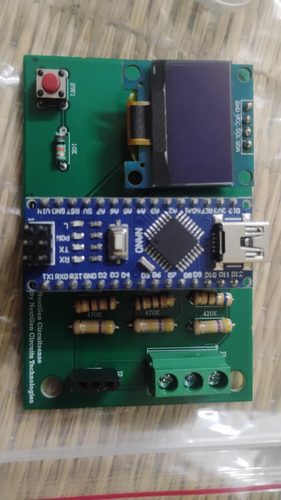
NextGen Circuits Technologies has introduced CircuitSense V1.0, a compact electronic component tester that automatically identifies supported components and displays their type, symbol, and measured value on an OLED screen. Built around an Arduino Nano, the device is designed for electronics students, teachers, hobbyists, and technicians involved in circuit testing, repair work, and sorting salvaged components.
The tester supports resistors, capacitors, diodes, light-emitting diodes (LEDs), transistors, and inductors. Users can insert a component into the test terminals and press the reset button to start the identification and measurement process. The device applies small test signals across different terminal combinations, measures the component’s response, and uses its firmware to determine the component type, pin arrangement, and value.
The results appear on a 0.96-inch OLED display with an I2C interface. Depending on the component type and measurement capability, the display can also indicate polarity. The board provides three test terminals through a socket and a screw terminal, allowing users to test two-lead and three-lead components.
CircuitSense V1.0 measures resistance from 0.1Ω to 50MΩ, capacitance from 25pF to 100mF, and inductance from 0.01mH to 20H. It is powered through a USB cable connected to the Arduino Nano’s USB port. The printed circuit board (PCB) measures 75 × 50mm and includes a resistor network used as a measurement reference.
To perform a test, users must disconnect the component from any circuit or power source, insert it into the test terminals, and press the reset button to begin detection. The component can then be removed and replaced with another part for the next test.
The tester is intended for laboratory and educational use, as well as component identification during electronics repair. Users should safely discharge capacitors before testing, ensure correct terminal connections, and keep components within the specified measurement ranges.