

A new reference design combines integrated processing, connectivity and modular expansion to help engineers accelerate embedded system development across demanding applications and varied product requirements.
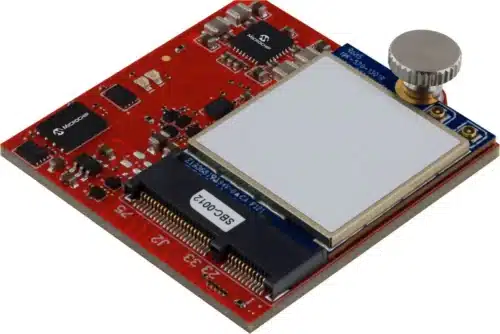
Microchip Technology has presented the SAM9X75 System on Module with M.2 Interface Reference Design, providing engineers with a highly integrated platform intended to support embedded system development across several application areas. The design centres on the SAM9X75 and combines processing, connectivity and modular capabilities in a shared system-on-module approach.
The reference design is positioned as a common platform that can span multiple customer products, potentially allowing development teams to work on different elements of a project in parallel. Microchip states that this approach can help shorten the overall development cycle while providing a foundation for products requiring integrated processing and connectivity.
The design uses a 32-bit microprocessor and includes an M.2 interface. The product information also identifies support for MIPI-based display functionality and Gigabit Ethernet, giving developers a range of interfaces for building connected embedded systems.
The reference design is categorised for applications including data centres, automotive systems, industrial equipment, grid and microgrid applications, and aerospace and defence. Its modular architecture is intended to give developers a starting point that can be adapted across different product requirements rather than requiring every system to be developed from scratch.
The accompanying reference design bill of materials identifies SAM9X75 as the relevant part number. The platform is described as an MPU-based system-on-module design with a highly integrated processor and general system functions.
By providing a ready reference platform, the design can help development teams evaluate system architectures earlier and organise hardware development around an established foundation. Its combination of processing, display connectivity, Gigabit Ethernet and M.2 expansion makes it suited to projects where several interfaces need to be brought together in a compact embedded platform.
Overall, the reference design is intended to simplify the early stages of embedded product development while supporting reuse across multiple applications and customer products.
Click here to review full reference design.