Want to improve your HMI designs? Learn how contactless touch buttons and magnetic dials can solve common design problems.
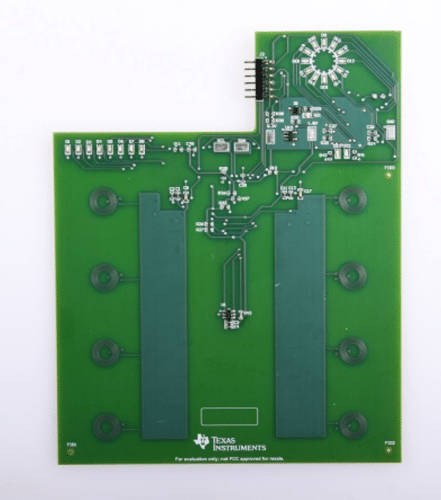
TIDA-060039, the inductive touch and magnetic dial contactless user interface reference design from Texas Instruments (TI), offers a valuable tool for design engineers working on human-machine interface (HMI) applications. By integrating inductive and Hall-effect sensing technologies, this design provides a robust, contact-free solution for creating seamless touch buttons and a rotating magnetic dial. Inductive sensors enable eight touch buttons on a smooth surface, with force touch capabilities that detect pressure and ensure the buttons remain usable even when wearing gloves or exposed to dirt and surface damage. The Hall-effect sensor enhances the design by implementing a contactless dial, reducing wear and tear compared to traditional potentiometers or rotary encoders, which can degrade over time.
The reference design supports various applications, including automotive centre information displays, appliance user interfaces, cooker hoods, dishwashers, ovens, intrusion HMI panels, and ATMs. It offers a flexible, adaptable design that can be used across industries, allowing engineers to integrate these technologies into their systems. The seamless touch surface and magnetic dial simplify the user interface and improve the final product’s durability and lifespan, addressing common issues engineers face with traditional electromechanical components that wear out over time.
For engineers, the reference design includes a detailed housing and a 3D-printed solution that showcases both the touch surface and the rotational push-button dial, making it easier to prototype and implement these features into real-world applications. The design also incorporates an integrated CORDIC algorithm, enhancing performance and simplifying development.
The Sensor Control Board (SCB) plays a central role in powering and managing the reference design, drawing power from a USB cable and providing 5 V and 3.3 V to the design board. The SCB simplifies the integration of these touch and dial functions into any system by handling all power requirements. The system operates in three modes, which can be toggled via the dial. The first mode provides a digital output on LEDs, indicating which button was pressed. The second mode offers pressure-sensitive feedback, lighting more LEDs for a harder press. In the third mode, the system streams data from half of the buttons to a graphical user interface (GUI) via a PC, enabling real-time monitoring and control. Throughout all modes, the angle of the magnetic dial is continuously measured and displayed on a circular LED ring, providing constant feedback to the user.

For design engineers, this reference design simplifies the development of contactless, durable HMI systems while offering versatility, ease of integration, and real-time data handling. Addressing common challenges in HMI design, such as wear and tear and environmental factors, provides a reliable solution for creating long-lasting, user-friendly interfaces.
TI has tested this reference design. It comes with a bill of materials (BOM), schematics, assembly drawing, printed circuit board (PCB) layout, and more. The company’s website has additional data about the reference design. To read more about this reference design, click here.