What if a simple text prompt could create a custom test instrument? A new AI-based platform makes it possible without FPGA programming.
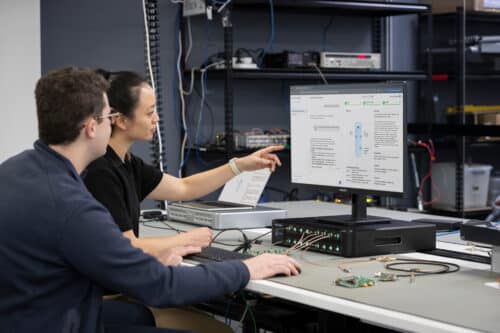
Liquid Instruments has introduced GenInst Studio, an AI-based test platform that creates custom test instruments from natural language prompts. The platform combines agentic AI with reconfigurable hardware, allowing engineers to build, validate, and deploy application-specific instruments on Moku hardware without FPGA programming.
Users describe their testing requirements through a chat interface instead of developing custom FPGA-based instruments or relying on fixed-function test equipment. GenInst Studio generates, validates, and deploys a custom instrument through an auditable workflow. The resulting instrument supports real-time, low-latency operation for applications including digital signal processing, custom triggering, control systems, and adaptive signal generation.
The launch follows Liquid Instruments’ recent $50 million Series C funding round, co-led by Keysight Technologies and Australia’s National Reconstruction Fund Corporation. According to the company, its Moku platform is used by organizations including NASA, NIST, Stanford University, and defense companies for research, engineering, and testing.
“The convergence of agentic AI and reconfigurable hardware creates something genuinely new — the ability to build exactly the instrument you need, simply by describing what you want,” said Daniel Shaddock, CEO and co-founder of Liquid Instruments. “That’s something our industry has never seen before.”
Early users reported that test solutions which previously required FPGA expertise and months of development could now be created in a single session.
“I’ve been working with FPGA-based systems for decades, so I know how much expertise custom development normally requires,” said Dr. Grady Koch, Chief Technology Officer, Apex Photonics. “GenInst Studio makes custom capabilities accessible without requiring deep FPGA expertise, allowing engineers to move from concept to working prototype much more quickly.”
“GenInst Studio opens new commercial opportunities by making advanced instrumentation easier to adopt, customize, and scale. We see strong potential for it to help reach new markets, accelerate customer adoption, and create new value across research and industry,” said Maximilian Dreher, managing director, SI Scientific Instruments GmbH.