Your WiFi can track your heart rate without a smartwatch or sensor. Can ordinary signals be used to check your health at home? Read on!
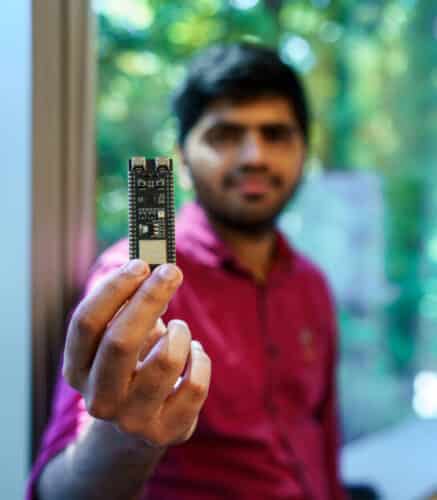
Researchers at the University of California, Santa Cruz have developed a system that measures heart rate using WiFi signals without requiring any wearable devices. The method, called Pulse Fi, achieved accuracy in tests, offering a low-cost, non-intrusive solution for home health monitoring.
In experiments involving 118 participants, Pulse Fi measured heart rate with about half a beat per minute of error after five seconds of signal processing. The system worked whether the person was sitting, standing, lying down, or walking. It performed across 17 body positions and various device placements in a room.
Pulse Fi uses low-cost hardware ESP32 WiFi chips (5 to 10 dollars) and Raspberry Pi devices (30 dollars) combined with a machine learning algorithm trained to detect variations in WiFi signals caused by a human heartbeat. The system remained accurate up to three meters away from the hardware and showed results at longer distances during tests.
The technology works by transmitting radio frequency waves from a WiFi device toward a receiver like a computer or phone. As these waves pass through objects, variations occur when a person’s body moves due to heartbeats. Pulse Fi’s algorithm filters out other sources of variation, such as body movements or environmental noise, focusing on heartbeat signals.
To train the machine learning model, the researchers created a dataset of WiFi signal changes corresponding to heartbeats. They set up the ESP32 system together with an oximeter in the UC Santa Cruz Science and Engineering Library to collect data. This dataset allowed the neural network to learn which signal changes matched heartbeat patterns. The team also tested Pulse Fi using a dataset from a research group in Brazil that used Raspberry Pi devices, believed to be the largest dataset available for WiFi-based heart rate monitoring.
This points to a future where health monitoring becomes easier, cheaper, and more accessible, useful in homes, low resource environments, and for people who cannot or prefer not to use wearable devices.