




Sensor array and magnetic actuation system guide and trigger the capsule, eliminating the need for onboard power.
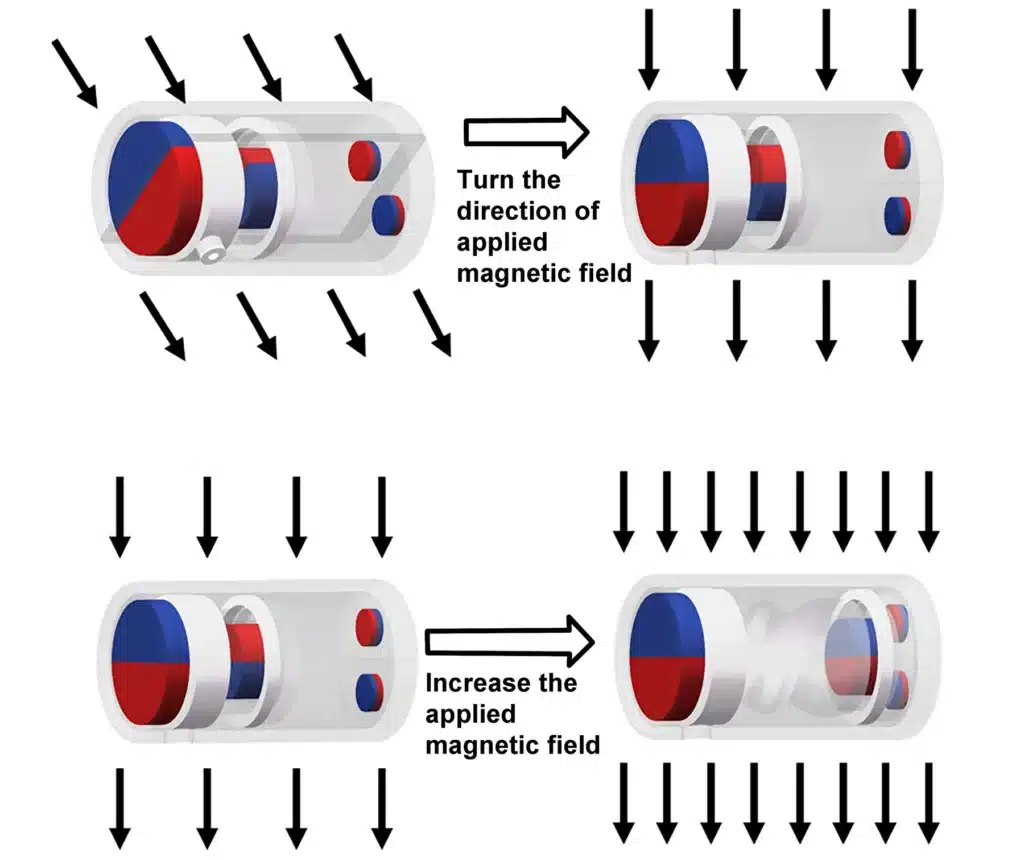
Researchers in China design an electronic-mechanical capsule that collects fluid from the intestine using magnetic actuation and external sensor arrays. The study is published in IEEE Transactions on Biomedical Engineering and demonstrates the concept in pig intestine models.
The system architecture links three parts: the capsule’s passive mechanical design, the external magnetic field for actuation, and the magnetic sensor array for position and orientation tracking. Integration of these components enables sampling without direct wiring or embedded power.
The capsule measures 16.3 by 24.4 millimetres. After swallowing, its position and orientation are tracked in real time by an external magnetic sensor array. This system provides feedback to the operator, who uses external magnets to guide the capsule through the gut. The same magnetic field triggers an internal spring mechanism when the capsule reaches the target site.
Unlike active electronic implants, the capsule requires no onboard power supply. It functions as a passive electromechanical system, controlled entirely through external magnetic fields and guided by sensor feedback. Laboratory tests confirm that it can collect fluids across a range of viscosities and seal them effectively.

The internal mechanism consists of a compressed spring and a flexible chamber to collect the fluids inside the gut. After activation, the spring expands and creates negative pressure inside the chamber. This suction draws intestinal fluid through a sampling port.
Because the capsule aligns with the external magnetic field, the port faces the fluid source before activation. The chamber then seals, storing the sample until the capsule is retrieved after natural exit.

