A chip has been cleared for European space use. It can handle computing, data transfer, and basic tasks on satellites in low and medium orbit.
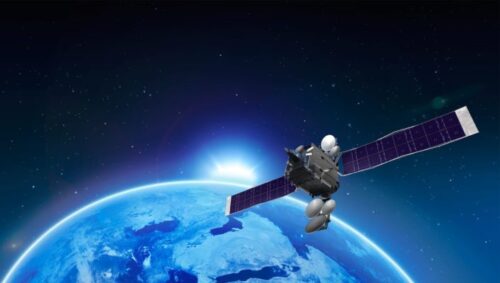
NanoXplore and STMicroelectronics have qualified the NG-ULTRA SoC FPGA for space use under the ESCC 9030 standard, making it the first device certified under this European specification for plastic-packaged microcircuits.
The radiation-hardened NG-ULTRA is built for low- and medium-earth orbit missions and is planned for satellite programs such as Galileo, Copernicus, and IRIS². It targets constellations and other missions that require reliable and cost-focused components.
The ESCC 9030 qualification marks a change in European space hardware. The standard supports flip-chip devices on organic substrates or plastic packages, offering space-grade reliability without ceramic packaging used for deep space. This helps meet the scale and cost needs of constellations.
Demand for onboard digital systems is changing. Constellations in low and medium earth orbit require more computing power, controlled energy use, and lower system costs. NG-ULTRA supports more data processing in orbit through edge computing. This reduces dependence on ground stations and eases bandwidth limits between satellites and Earth.

The device is designed for onboard functions. These include onboard computers, data routing between subsystems, image and video processing with compression and encoding, Software Defined Radio that allows remote updates of communication modes, and onboard autonomy tasks such as detection and supervision.
NG-ULTRA uses a single-chip SoC architecture that combines a multi-core processor with programmable logic. This reduces board complexity and component count while improving latency, mass, and power use. The device integrates a quad-core Arm Cortex-R52 processor, 537k lookup tables, and 32 Mb of RAM to handle computing tasks.
It is manufactured on STMicroelectronics’ 28 nm FD-SOI platform, chosen for energy efficiency and radiation performance. With radiation hardening techniques, the device is built to withstand launch shocks, vibrations, thermal cycles, and exposure in orbit. It supports a total ionizing dose of up to 50 krad (Si), is immune to single event latch-up up to 65 MeV·cm²/mg, and resists single event upset beyond 60 MeV·cm²/mg.
The SRAM-based architecture allows reconfiguration in orbit. Hardware functions can be updated after launch to support standards or mission phases. This extends satellite life and keeps systems usable over time.
The program also supports the goal of strengthening Europe’s space supply chain. Design, fabrication, packaging, testing, and reliability validation are carried out across European sites, including research and design centers in Paris, Grenoble, and Montpellier, along with STMicroelectronics facilities such as the 300 mm fab in Crolles and packaging and test sites in Europe.
For development teams, NG-ULTRA is available as an evaluation kit. It provides a prototyping platform to validate interfaces and performance, reduce integration risks, and support software and logic development before flight hardware production.